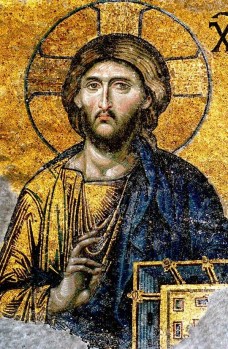
Hello, it’s been a few weeks since my last post. I have continued to do research on the resurrection and editing multiple drafts of my write-ups on what I am learning and thinking about it. Here is the section which follows my last post. That one was about Paul’s list of the appearances of the risen Christ in his first letter to the Corinthians, and this one is about his discussion of the nature of the resurrected body in that same letter. This will be the second of three parts on what Paul has to say about the resurrected Christ. I am near finished with the third part, which is entirely new.
This section today starts with where the last post ended, that Paul knew of multiple reports of appearances of the risen Christ.

What are resurrected bodies like?
Nowhere does Paul describe what any of these appearances were like, including his own experience. The Greek verb translated “appeared to” or “was seen” (ōphthē) implies a visual experience. A Greek translation of the Jewish scriptures which was widely used by early Christians utilizes the same Greek verb for the visual manifestations of God or angels to figures such as Abraham, Moses, Elijah, Isaiah and Daniel. (Segal, 2004: 406) If Jesus was seen, was he here on earth or in a vision of the heavens? Did he look recognizably like the pre-death Jesus or different in some important way, such as with a luminous face? (See 2 Corinthians 4:4-6) Did they hear his voice along with a visual appearance? Did they touch him? Did he handle any objects? Where did he come from and where did he go? Paul says nothing to satisfy our curiosity.
We do have a slight clue as to Paul’s understanding of what the resurrected Jesus was like. Later in his letter to the Corinthians Paul attempts to answer a question: “How are the dead raised? With what kind of body do they come?” His answer is not very clear, except to emphasize that our “perishable,” dishonorable and weak ordinary body will be categorically different from our “imperishable,” glorious and powerful resurrected body. The Greek terms he uses for the bodies before and after resurrection are sōma psychikon and sōma pneumatikon, sometimes translated “physical body” and “spiritual body.” However, the words sōma, psyche, pneuma and their derivatives, along with a number of other words Paul uses to talk of the components of human beings, are not easily translatable into English. Not only are our concepts of the composition of a human being different from Paul’s, such words are usually not used with a high degree of precision either in ancient or modern times.
A half century ago Robert Gundry, challenging the famous Biblical scholar Rudolf Bultmann’s existentialist interpretation of the resurrection, analyzed uses of such words in first century literature in the eastern Mediterranean, focusing in particular on sōma. (Gundry, 1976) He demonstrated that sōma primarily means a physical body, although it can also stand for the entire human being–but always including one’s physical body. Thus both sōma psychikon and sōma pneumatikon imply a physical body. The modifier psychikon has the same root as psychology, referring to the inner life of a person; psyche is often translated as “soul.” The other modifier, pneumatikon, is based on the word pneuma, which can mean “breath” or “spirit.” According to Gundry, Paul is not contrasting a material human body to some kind of incorporeal “body.” He is contrasting two types of physical bodies. One type of physical body is animated by a person’s soul, an “ensouled body,” as Alan Segal puts it (Segal, 2004: 429), that is, a live human being as we ordinarily know them. The other type of body is still physical but transformed in some mysterious way excluding “flesh and blood” (1 Cor 15:50), something inconceivable based on our ordinary experiences of physical bodies.
Nineteen years after Gundry, Dale Martin did an extensive analysis of the First Letter to the Corinthians in the context of ideas about bodies and life after death which were contemporary with Paul. (Martin, 1995; especially Ch. 5) The material body/immaterial spirit duality which is now taken for granted was not a feature of that culture. The general view of the Greek and Roman philosophers was that living human bodies are composed of a hierarchy of various substances, all of them material, but some denser like the earth, while others are less so like the air. At the bottom of the bodily hierarchy was sarx, roughly meaning flesh. Higher on the hierarchy was the psyche, which could be denser or more refined, depending on whether an individual was more inclined to desires shared with animals or to the pursuit of philosophical contemplation. At death the psyche separated from the flesh into their individuated substances, the psyche, if highly refined, persisting in existence, while the flesh decomposed into the earth.
For Paul the hierarchy went from sarx, to psyche, to pneuma at the highest level. Pneuma was regarded as the very refined substance of divine beings such as angels. Paul writes that “the first man, Adam” came to be a psychē zōsa (“living soul”) while “the last Adam,” meaning Jesus, became a pneuma zōopoioun (“life-giving spirit”) (1 Cor 15:45). Paul, according to Martin, expected the resurrected body to shed both sarx and psyche and to be composed of the remaining substance pneuma. Paul’s interlocutors were likely the more educated members of the Corinthian church who would have been familiar with Greco-Roman philosophical ideas and opposed to the notion that a corpse, with its heavy, dense substance of flesh, could be raised to a higher life in heaven. The less educated commonly thought of resurrection as portrayed in myths and legends of people who died and then returned to life in the familiar form of bodies pretty much as we know them. Paul agreed with the educated that “flesh and blood” could not inherit the kingdom of God, but wanted to maintain the Jewish position of the Pharisees, a sect he once belonged to, that there is a continuity between the body that dies and the body that is resurrected. He was especially concerned to bring the two factions of the Corinthian Christians into harmony by urging the more educated to tolerate less sophisticated views.
It is easy to see why the nature of the resurrected body was controversial among the Corinthians. To this day commentators argue about what Paul was trying to describe with his language about bodies, souls, and spirits. (See, for example, Bryan, 2011: 217-220) But how would Paul know any of the things he says about resurrected bodies? Would seeing an appearance of the risen Jesus convey what kind of substance his body was composed of, or how refined that substance was? Or how it was related to the body that had died? Paul was pressing into service what language was available to him to try to fit the appearances of Jesus within the context of first century views of human bodies, death, and resurrection.
As a Pharisee he would have been committed to the idea of a general resurrection at the end times, during which God would raise human beings back to their ensouled bodies for the final judgment. Early Christians, like many Jewish people of that time, shared this view, and they would have understood the appearances of Jesus through that lens. Apparently Paul’s experience of the risen Christ, and what he knew about the appearances to others, was not compatible with the uneducated person’s expectation of corpses literally recomposing and resuming life in the body they had before. In his letter to the Corinthians he struggles to explain how the resurrected body could be the same person yet in a very different form from than that of the body before death. Trying to tie these two things together—Jewish ideas of the general resurrection and what people saw in the appearances of Jesus after his death—was a challenge, and, as we will later see, a continuing source of controversy among the early Christians.
Sources cited
Gundry, Robert H. (1976). Sōma in Biblical Theology with Emphasis on Pauline Anthropology. Cambridge University Press.
Martin, Dale B. (1995). The Corinthian Body. Yale University Press.
Segal, Alan F. (2004). Life After Death: A History of the Afterlife in the Religions of the West. Doubleday.
 Jesus Reconstructed