Reviews of Nina Livesey’s book about “Paul’s” letters

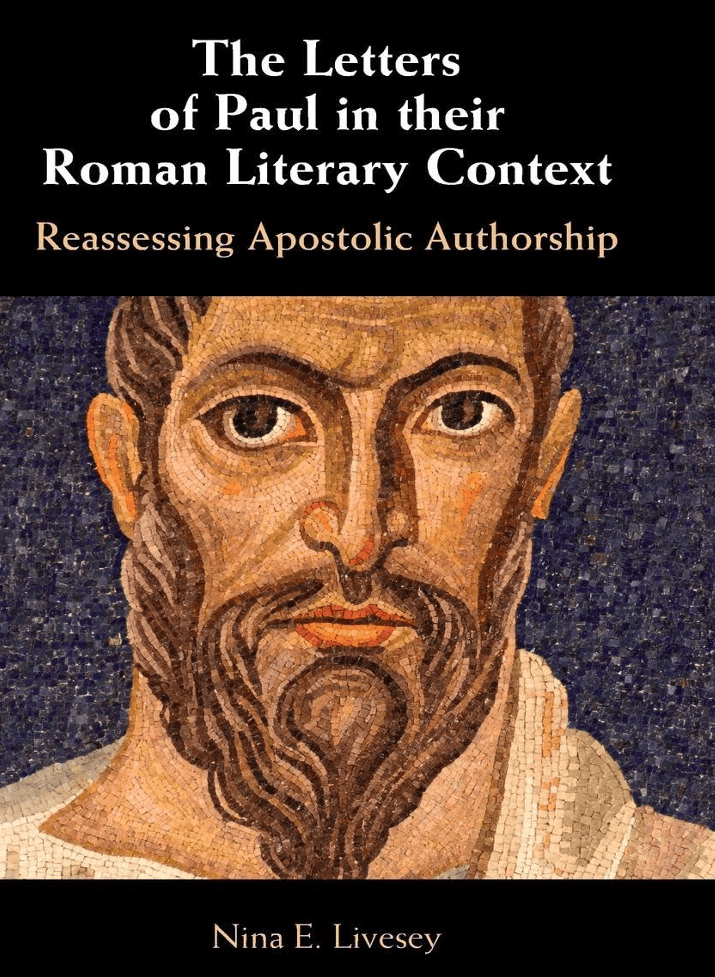
I recently finished reading Nina Livesey’s 2024 book, The Letters of Paul in Their Roman Literary Context. Her central thesis is that the seven letters of Paul widely considered by Biblical scholars to be genuine 1st century writings are instead pseudonymous compositions of the mid 2nd century. That is, the authors of the letters are pretending to be “Paul” and writing nearly one hundred years after Paul was supposed to have lived. She further argues that the likely location of the letters’ composition is the school of alleged Christian heretic Marcion in Rome. A huge amount of historical research on early Christianity would be overturned if she is correct, thus of course one would expect a lot of resistance to it.

As I noted in my previous post on her book, when I first heard of her thesis I was skeptical but intrigued. After listening to her in a couple of YouTube videos I was impressed enough to rethink my assumptions about Paul and early Christianity. It struck me that her thesis helps make sense of a couple of problems that I was already aware of.

The first problem is a chronology in which the letters of Paul precede the composition of the Gospel According to Mark, thought to have been written in the 70s of the 1st century. Paul’s letters have a higher Christology and more developed theology that Mark seems to have. It makes more sense to me that a relatively low Christology and less developed theology came first, thus Mark should have preceded the composition of the letters.

The second problem is a larger one: a chronology in which the letters of Paul precede the composition of the Acts of the Apostles, which narrates Paul’s missionary activity. If Paul was known to have written theologically dense letters that were so cherished by their recipients that they preserved them and shared them with other Christian communities, why does the author of Acts say nothing about Paul’s letters and depict speeches by Paul in which his theological views don’t match his letters? Doesn’t it make more sense that Acts was written first and the pseudo-Paul writers of the letters placed their theological embellishments into settings and situations derived from Acts?

And so I read her book. I found it to be well-documented, thoroughly researched, carefully argued, and persuasive. Her arguments against the conventional dating of the letters are, in my opinion, very strong. Her arguments for the origin of the letters in Marcion’s school are not quite as convincing, although, as she says, her thesis is a better fit of the evidence than the conventional view.

To further test her ideas I read and watched a few takes on her book from those with more expertise than me. Here the ones I found most useful so far:

Paula Fredriksen’s review delivered to the Society of Biblical Literature in 2025.

“The Letters of Paul: A Review of Nina Livesey’s New Book,” on M. David Litwa’s YouTube channel.

“Did Paul the Apostle Exist?! | Dr. Nina Livesey Vs. Dr. Bruce Chilton,” on the History Valley YouTube channel.

I also asked ChatGPT if Bart Ehrman had reviewed her book and learned he had not, but that he has comments regarding it scattered about his blog. I then asked ChatGPT to summarize his comments and it did so.

What I would say at this point is that these confirmed my initial reaction to her book. None but Ehrman take issue with her contention that a 1st century dating of the letters is weakly supported. Ehrman’s argument relies on one of the letters of Ignatius of Antioch to show early knowledge of Paul’s letters. But Livesey addressed this in her book, showing how the letters of the apostolic fathers like Ignatius and Polycarp also share the characteristics of pseudonymous “letters in form only,” which was a common genre at that time. Based on ChatGTP’s account of Erhman’s comments, I doubt he has read her book.

What they do take issue with is her alternative dating and location of the composition of the letters, and Fredrikson and Litwa make some very specific arguments here. A couple of examples. Fredriksen points out that Livesey mistakenly dates the destruction of the Jerusalem Temple, which actually happened in 70, not during the Bar-Kokhba uprising of the 2nd century, and that neither event resulted in widespread Roman antipathy to the Jewish law as Livesey states. Litwa questions why there is no evidence that anyone writing around that time expressed suspicion at the letters’ supposedly sudden appearance.

My view now is that the letters are probably pseudonymous “letters in form only,” but that producing a plausible alternative dating will require examining the contents of each letter in light of developments in the post-70 period. I no longer have enough confidence in the letters to use them as I did in examining the resurrection of Jesus, a topic I have spent much of the last year researching and writing about! I was almost done with that section of this website but now I don’t think I will finish it. The foundation of my account feels too shaky. (I will keep those pages up for the time being.)

Instead I am going to once again make a new start. This time I will interrogate early Christian history by starting with the gospel of Mark and trying to figure out where Paul’s letters best fit as I go on from there. I may find I am on the wrong track, but I am very interested in seeing if an alternative history can be produced.

What do you think?

Are Paul’s letters the earliest source on Jesus?

Okay, here’s another instance where I come across something that causes me to rethink everything I thought I knew about early Christianity.

This week I saw a couple of interviews with Dr. Nina Livesey, author of The Letters of Paul in their Roman Literary Context. The most startling takeaway from these interviews was that the Apostle Paul may have been a purely fictional character and “his” letters actually produced by someone a century after Paul was supposed to have lived. You can watch the interviews on YouTube:

Luke Invented Paul the Apostle

The Apostle Paul and His Letters Were Fabricated?

Before watching the videos I thought I would be hearing a Jesus mythicist (who does not believe Jesus was a real person) moving into Paul mythicism. I was curious about her arguments as my research on the resurrection of Jesus has shown how central the letters of Paul are to this topic.

But she does not seem to have started from a position of mythicism at all, rather she as an expert on the letters of Paul who had some unanswered questions about them. As she laid out her thinking I found her arguments to be very strong, at least compared to the arguments that Paul’s letters were written by him only about twenty years after the death of Jesus. I already knew how tenuous those arguments were, as they depend on correlating the dating of the letters with the reliability of the history in the Acts of the Apostles.

My whole picture of the development of Christianity has now shifted radically, due to these interviews and some writing on Josephus I’ve been reading. The historicity of the Acts of the Apostles is called further into question, leaving the entire period between the death of Jesus and the writing of the gospel of Mark in the dark. Paul can no longer be assumed to be a first-hand witness of the risen Jesus. Nor can we rely on his tradition in 1 Corinthians 15 about the other witnesses to the risen Jesus.

The conventional view on dating the early Christian sources and their relationships to each other has been this:
50s: letters of Paul
70s: Gospel of Mark
80s-90s: Gospels of Matthew & Luke (both using Mark) and Acts of the Apostles
90s-100: Gospel of John

My view is tentatively now like this:
70s: Gospel of Mark
80s: Gospel of Matthew (using Mark)
70s-90s: Josephus’ writings (perhaps using Matthew?)
Early 2nd century: Gospel of Luke and Acts of the Apostles (using Mark, Josephus, and perhaps Matthew), Gospel of John (using Mark, Matthew & Luke)
Mid-2nd century: letters of Paul

As you might infer, this new timeline would require revising a lot of historical research on early Christianity. This would include the pages I’ve already written on the resurrection over the last year or so!

I intend to obtain a copy of Livesey’s book as soon as I can to take a look at her arguments up close, then to read some of reviews of the book. I will then have to decide if the new timeline holds up better than the old one, and revise this website accordingly.

Lot of work, but kind of exciting to find my picture of early Christianity changing almost week by week as I pursue this project. I will certainly keep you all posted.

Appearances of the risen Jesus in Matthew’s gospel

In my previous post I explained why the gospel of Mark does not depict any appearances of the risen Jesus. In this post I move on to Matthew’s account of the resurrection appearances.

The gospel of Matthew presents two brief accounts of appearances of the risen Jesus. Both can be directly tied to particular interests of the author, indicating that they are his creation, although it is possible he knew something about Mark’s ending and adapted it to fit his own purposes. The possibility is more likely for his account of the second appearance, in which Jesus appears to his disciples in Galilee as the angels in both Mark and Matthew say he will.

In the first appearance, described in just a few verses, Jesus appears to the women on their way from the empty tomb to convey the angel’s message to the other disciples. (Mt 28:7-10) As I argued earlier on my page about the empty tomb, Matthew’s main purpose in creating the women’s encounter with Jesus is to slip in an appearance near the site of the tomb to establish that his body was resurrected and not stolen by the disciples, an accusation explicitly expressed in his gospel. He may have known that there were reports of multiple appearances of Jesus, as Paul recounts in his letter to the Corinthians (“he appeared to more than five hundred”), and so did not think an appearance to two women followers would be out of bounds for his story.

After he describes the chief priests bribing the guards to lie that Jesus’ disciples had stolen his body, Matthew abruptly jumps to Galilee with “the eleven disciples”—presumably the twelve apostles appointed by Jesus earlier in the gospel minus his betrayer Judas. This is the second, and final, appearance of the risen Jesus in Matthew’s gospel:

Now the eleven disciples went to Galilee, to the mountain to which Jesus had directed them. When they saw him, they worshiped him, but they doubted. And Jesus came and said to them, “All authority in heaven and on earth has been given to me. Go therefore and make disciples of all nations, baptizing them in the name of the Father and of the Son and of the Holy Spirit and teaching them to obey everything that I have commanded you. And remember, I am with you always, to the end of the age.” (Mt 28:16-20)

Jesus appears at a mountain, a traditional site of divine self-revelations such as to Moses on Mount Sinai; a favorite Matthean theme is that Jesus offers a new covenant for all people that goes beyond the covenant God established with the Israelites through Moses. Jesus’ instruction to his disciples to teach what he commanded echoes Moses delivering God’s commandments to the Israelites. (Deuteronomy 31:11-12; see also Mt 5:1, 21-48, from Jesus’ “Sermon on the Mount.”) The disciples worship Jesus, as the women had, emphasizing Matthew’s belief that Jesus had been exalted to a divine status, which is why Jesus can claim “All authority in heaven and on earth has been given to me.” The part of the verse in which witnesses doubt what they see is grammatically unclear and probably best interpreted as “some worshiped him, but some doubted,” perhaps a commentary on the responses of Matthew’s contemporaries the proclamation of Jesus’ resurrection. It has also been suggested that it expresses wavering belief, as when Peter tries to walk on water and begins to sink (Mt 14:29-31). (Licona, 2010: 360-361) Matthew is the only author in the Christian scriptural canon to use the Greek word “distazo” for doubt, which he uses in both passages. (Catchpole, 2000: 42)

The risen Jesus commissions the eleven to “make disciples of all nations” (literally “all peoples”). Another Matthean theme is his endorsement of the Christian mission to the gentiles. This activity was controversial among Christians at the time of Paul decades earlier, but by Matthew’s time he is comfortable indicating Jesus’ approval for the mission by reworking several passages from Mark’s gospel. (Catchpole, 2000: 43-52) Jesus’ command to baptize “in the name of the Father and of the Son and of the Holy Spirit” uses a Trinitarian formula that suggests theological development in the understanding of the relationship between God the Father, Jesus, and the Holy Spirit, and thus may be an early alteration of Matthew’s gospel by a copyist. Note though that the relation and relative status of the three is not spelled out in any explicit sense; rather the three are all brought together in endorsing baptism into the community of faith. Jesus then promises to be with his disciples “always,” until “the end of the age,” which ties back to a prophecy at the beginning of his gospel referring to Jesus as Emmanuel, or “God is with us.” (Mt 1:22-23) Matthew’s gospel ends at this point. He does not mention Jesus giving the disciples the power to forgive sins, as Jesus does in Luke and John (Lk 24:45-48; Jn 20:22-23), although Jesus himself is shown exercising this power during his life. (Matt 9:2-8) I wouldn’t make much of this difference, as Matthew probably understands the power to forgive sins as implicitly given to the disciples in Jesus’ commission.

Unlike the early appearance tradition recounted by Paul, Matthew does not mention an initial appearance of the risen Jesus to Peter. Instead he appears to those who came next in Paul’s chronology, “the Twelve” (minus Judas). I doubt Matthew knew much about the details of the appearances of Jesus reported by Paul. Instead he composed a brief collective experience focusing on Jesus’ commission to the apostles to announce God’s new covenant to “all peoples,” as the focus of the Christian mission had shifted decisively outside of Judea due to the war with Rome in 66-73 C.E.

References

Catchpole, David. (2000). Resurrection People: Studies in the Resurrection Narratives of the Gospels. Darton, Longman, & Todd.

Licona, Michael R. (2010). The Resurrection of Jesus. InterVarsity Press.

The missing ending of the gospel of Mark

Hello friends. I haven’t posted much lately because I slowed down my writing to run ahead in my reading. My reading has moved on from the resurrection to the life of Jesus. But I have been slowly finishing up my last two pages about the resurrection, and I actually finished writing about the gospel of Mark’s lack of resurrection appearances quite a while ago. Today I decided to give you that piece as I continue to work on the rest of it. Here it is:

The gospel attributed to Mark, which appears to be the earliest narrative of Jesus’ life and death that we have, ends without depicting any appearances of the resurrected Jesus. Some early copies of Mark do contain material at the end of the gospel that read like condensed versions of the appearances found in the other gospels, but manuscript and stylistic evidence have established “to the satisfaction of virtually all scholars” that this material was not written by the author of Mark. (Croy, 2003: 14) Many scholars have concluded that the author intentionally ended his story with the women discovering Jesus’ empty tomb and hypothesize reasons why he would have done so. But this flies in the face of what Mark clearly leads the reader to expect: as the “young man” at the tomb tells the women (Mk 16:7), and Jesus earlier predicts (Mk 14:28), the risen Jesus was to appear to Peter and his other disciples in Galilee.

In his study of the problem, Croy (2003) examined the arguments about Mark’s abrupt ending and defended the thesis that the both the beginning and ending of Mark’s original gospel were accidentally lost, probably by the outer page of a codex coming loose like the cover of a modern magazine. He notes that Mark is particularly fond of showing prophecies fulfilled and depicts Jesus repeatedly prophesying his own resurrection. The idea that Mark would have deliberately subverted his readers’ expectations is anachronistic; other ancient writers show no sign of such a literary strategy. It might seem like early Christians would take care that a gospel was carefully preserved and the loss of parts of a manuscript would be rectified by consulting other, intact copies. But when Mark wrote his gospel it was not considered sacred scripture or even thought of as a “gospel,” it was very likely the first narrative of Jesus’ life and meant for reading to a popular audience, not to preserve for posterity’s sake. The damage to Mark’s gospel would have happened soon after its creation and before many copies had circulated, as both Matthew and Luke, who adapt Mark’s gospel for their own use, supplement their versions with differing birth narratives at the beginning and different resurrection appearances at the end of their gospels, neither of which are found in Mark. (The gospel of John is once again a case in itself.)

I find Croy’s case definitive; Mark originally contained an account of one or more appearances of the risen Jesus, but we know next to nothing about them because of the lost pages. Likely neither did the authors of the other gospels, who had come up with their own endings without Mark to guide them. What Mark leads us to expect is that the disciples scattered after Jesus’ death (Mk 14:27), but Peter and other disciples later saw the risen Jesus in Galilee (Mk 16:7). Beyond that is pure speculation.

Reference:

Croy, N. Clayton. (2003). The Mutilation of Mark’s Gospel. Abingdon Press.

Historical evidence in favor of Christian claims

I read ahead on what I am writing about on my Jesus Reconstructed website, so the interesting things I come across have not all reached my pages yet. In this post I want to share three pieces of evidence that strike me as favoring some of the claims of Christianity.

1. Jesus as a real human being. T.S. Schmidt’s new book Josephus and Jesus: New Evidence for the One Called Christ (click for a free copy) makes a very strong case for the authenticity of the famous Testimonium Flavianum passage in Josephus’ Antiquities of the Jews. In Schmidt’s translation the passage is more ambivalent about Jesus than in other translations, and Josephus’ references to Jesus’ “mighty” words and deeds, the resurrection, and the identification of him as the Christ could have been derived from Christian sources. But as Josephus knew some of the chief priests alive in the early 1st century, or knew their immediate descendants, he would have been in a position to know if the crucifixion actually happened. Schmidt’s case, plus references to James the brother of Jesus by both Josephus and Paul, have persuaded me that the historical evidence favors the reality of Jesus as an actual human being and not, as the mythicists argue, a figure known only through visions.

2. Jesus’ self-conception. Many scholars argue that high claims for the role of Jesus in history were developed sometime after the resurrection reports, and that Jesus in his lifetime did not see himself as more than a prophet and rabbi (a teacher of the correct interpretation of the Jewish laws). Yet in Paul’s account of the last supper, Jesus said he was instituting a “new covenant.” I have not been able to find evidence of manuscript variations in his use of this phrase. This is a pretty high claim, as the last covenant God made was through Moses on Mount Sinai. Jesus is claiming that the Passover meal was now, for his disciples, a remembrance of a new covenant made by the sacrifice of his body and blood, not a remembrance of the old covenant given through Moses. This quote is evidence that Jesus himself saw his death as instituting a new phase in God’s plan for humanity.

3. The resurrection. Although I find the gospel accounts of appearances of the risen Jesus unconvincing as historical evidence, the appearances referred to in Paul’s first letter to the Corinthians carry weight as reports derived from witnesses. Lately commentators have favored explanations comparing these reports to other types of visions of deceased people, such as grief visions by survivors (Peter/Cephas and James would be candidates for this), or visions induced by mystical practices (Paul is the candidate here). These comparisons are meant to show that the visions of the risen Jesus were not unique. It is true that there are contemporary reports of realistic appearances by deceased people, including appearances to multiple people at the same time and appearances to both those who knew and did not know the departed in their lifetime. However, to my knowledge there are no other examples of appearances of the same dead person to multiple individuals and groups (especially a group as large as 500 people) at different times. This aspect seems unique. It is also far from clear if all of the contemporary incidents can be explained as purely psychological rather than actual communications from a dead person. In some reports the deceased communicates information that otherwise could not have been know to the recipient. (I experienced this myself in a dream of a former colleague who informed me he had died.) From a historical standpoint, the events behind the appearance reports in Paul’s passage remain an unsolved mystery.

As I consider all this, I find myself leaning toward the position that the historical evidence shows at least these three things: Jesus was a real person, he saw his death as instituting a new covenant with God, and the reports of his appearances after his death remain an unsolved mystery. I am surprised at this, not because I had a firm opinion about traditional Christian claims one way or the other, but because I expected the historical evidence to be inconclusive about these particular topics. Of course the Christian claims are not proven by any of this, but it does provide a historical basis for some apologetic arguments.

I don’t mind moving closer to traditional Christianity (I still have a ways to go on some issues), but I am left with a further dilemma. Which church would I join? So far I see them all as problematic. We’ll see where all this takes me.

Jane Schaberg and the empty tomb

I recently finished re-reading The Resurrection of Mary Magdalene by the late Dr. Jane Schaberg. Jane was my Biblical Studies professor when I was an undergraduate majoring in Religious Studies back in the 1980s. Although she encouraged me to pursue graduate work in Biblical Studies, I went in a different direction. We became friends and had sporadic contact over the years.

She published The Resurrection of Mary Magdalene in 2002, and I first came across it about 2005, twenty years after receiving my bachelor’s degree. This was during a period when I was “deconstructing” my Roman Catholic religious beliefs for the second time. The first time was in my teenage years when I simply discarded it as of no interest. I returned to the faith in my mid-twenties, only to deconstruct more deliberately in my late forties.

At the time I had left my academic career in political science and belatedly began to pursue a Religious Studies degree at the Graduate Theological Union in Berkeley CA, with courses and teachers from a variety of religious orientations. I wanted to take a closer look at Christian and Buddhist religious traditions to determine what each of them meant to me at that turning point in my life.

I did a lot of reading on my own, utilizing the GTU library, and it was then that I read Jane’s two major books. It was fascinating to read her work for the first time and helpful in sorting through some of my thinking about religious texts and Catholic dogmas.

I reread her book this year, another twenty years later (!), because Mary Magdalene is a key figure in the gospel reports of the death and burial of Jesus and the discovery of his empty tomb. I felt like I was meeting Jane on an intellectual and personal level in a way I hadn’t before. It was like talking over a subject of mutual interest with an old friend.

Her unexpected gift to me was in understanding how much the figure of the “Son of Man” in Ch. 7 of the book of the prophet Daniel influenced the gospel attributed to Mark. I had to revise my page on the empty tomb once again to incorporate this insight. The empty tomb had the elements of an apocalyptic text similar to those in Daniel, with an emotionally troubled protagonist seeing something incredible, having it interpreted by an angelic figure, and then keeping quiet about it due to fear.

So I want to thank Jane for this insight, for her encouragement at different points of my life, and for her teaching me some of the basics of critical Bible study long ago. Although she died in 2012, I have encountered her again and learned from her. I don’t know whether her grave is empty or not, but I do know she is still with me on my journey.

The empty tomb, Part 2: final paragraph

Yesterday as I tried to finish writing and get the section about the burial of Jesus’ body posted, it took much longer than I anticipated. By the time I finished it was late in the day and I was tired. Later I realized I had neglected to write up a final, key paragraph. Here it is:

Final paragraph:

The earliest gospel, Mark, states without explanation that only two of the original group of women witnessing the crucifixion saw Jesus’ body being laid in the tomb. As the gospel was likely written decades after these events, during or after a devastating war in the Jewish homeland, the two witnesses could have been dead or refugees and unable to verify what Mark alleges about the burial. Matthew followed Mark in stating that only the two Marys witness the burial. Luke asserts that all the women saw the burial. John lists only four people witnessing the crucifixion (three Marys and the beloved disciple) and does not specify who saw the burial. However, only Mary Magdalene returns to the tomb later. The record of who actually saw Joseph bury Jesus’ body in the tomb is thus problematic and open to doubt

The empty tomb, part 2: the burial of Jesus’ body

In this post I start my analysis of the gospel accounts of the resurrection of Jesus, focusing first on the burial of his body.

“He was buried”

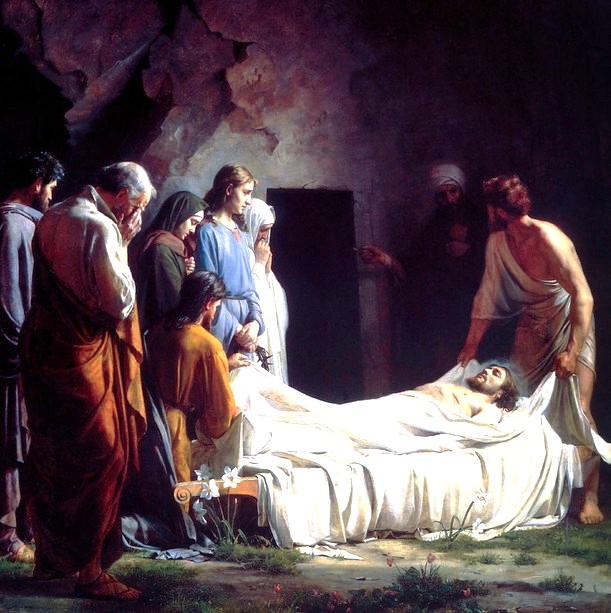
Mark’s scene of the women “looking on from a distance” at Jesus’ execution is plausible. (Mk 15:40-41) Crucifixions were public events that Jesus’ disciples could have attended, but fear of arrest would have kept his male disciples away. Women however were expected to be present when someone close to them was dead or dying in order to carry out expected customs such as weeping and singing formal laments. (Corley, 2002: 114-115)

Three of these women are named, as though Mark expects they may be familiar names to some of his reader/hearers. Mary Magdalene makes her first appearance in this passage. Her name suggests she was from Magdala, a fishing village on the northwest shore of the Sea of Galilee. Mark depicts Jesus’ early ministry as occurring in the area around the sea and describes his first disciples as fishermen, thus Magdalene’s name connects her to the early ministry. (Corley, 2002: 33) Mary the mother of “James the younger and of Joses” is not identified further, but earlier in the gospel Mark gives the same two names to brothers of Jesus and so this Mary may very well be Jesus’ mother. (Corley, 2002: 35) Possibly Mary’s son James is called “the younger” to distinguish him from Jesus’ early disciple James the son of Zebedee. One might question why Mark would not have said outright that this Mary was the mother of Jesus; it’s possible that this was another Mary who had sons with the same names. There is also the question of why he would list Mary Magdalene before her. Each of these details may have something to do with a need to highlight Mary Magdalene, even if it entailed downplaying the presence of Jesus’ mother, because Magdalene presumably played a central role in a tradition Mark was relying on. Mark says nothing to identify Salome; nearly half the women in the ancestral Jewish homeland were named Mary or Salome. (Corley, 2002: 32, 36) Likely Mark knew a woman named Salome was at the crucifixion but did not know anything about her. The abrupt introduction of these women, given Mark’s general lack of interest in women disciples of Jesus, suggests that their presence at the crucifixion may have been well known enough to early Christians that Mark wanted to use them as witnesses to the crucifixion and, more importantly, to the events that followed. (Corley, 2002: 28)

Less plausible is the passage about Joseph of Arimathea, who is otherwise unknown to history, and his interaction with the Roman prefect Pilate. (Mk 15:42-46) If “evening had come” there wouldn’t be enough time for Joseph to make his request to Pilate, the centurion to verify Jesus’ death, and the body removed from the cross and entombed before nightfall. These incidents would have to had occured earlier in the day. This could merely be clumsy writing on Mark’s part; I assume by placing the incident at evening he wanted to emphasize the body was removed before night came and the Sabbath began. Aside from that, I question the source for the story. Certainly Pilate did not talk to the early Christians about it. Joseph could possibly be the source, as Mark describes him as “waiting expectantly for the kingdom of God,” which could hint at some sympathy with Jesus’ disciples that led to later contacts. But this possibility conflicts with Mark’s description of Joseph as a respected member of the Jewish council that unanimously condemned Jesus and delivered him to Pilate for execution. Could Joseph condemn Jesus to death at a nighttime council meeting and the next day be so sympathetic to the Christian movement that he would go “boldly” to Pilate to ask for the body? In addition, the fact that Mark feels the need to explain who Joseph is suggests he did not expect his audience to be familiar with him. In sum, there is little evidence in Mark’s description of Joseph to support the idea that he was the source for the scene with Pilate. Did Mark know Joseph played a role in removing the body because the women recognized him and passed this bit of information down in the Christian community until Mark received it and expanded it into the scene with Pilate? I think it unlikely the women would have recognized him, as Joseph is a depicted as a high status Jew living in Jerusalem and the women are from rural Galilee.

The various problems described above suggest to me that Mark created a short fictional scene with Joseph and Pilate to achieve a few literary goals. First, the scene explains why Jesus’ corpse was removed from the cross, which I regard as a likely event as will be explained below, and does so in a way that legitimizes belief in (and foreshadows) the coming “kingdom of God.” Second, the centurion checking on Jesus provides confirmation that Jesus’ death actually happened. Third, the women witnessing the body being laid in the tomb and the stone being rolled against the door sets the scene for the discovery of the empty tomb when they later return to the location.

Although many commentators have questioned whether Pilate would have consented to the removal of Jesus’ body from the cross, this part of the story is within the realm of plausibility. Jesus’ death is portrayed as taking place during the Passover festival and there is some evidence that Pilate granted such favors on these occasions. (Lüdemann, 2004: 61-62; Allison, 2005: 360-363) A passage in a book by the first-century historian Josephus indicates that prior to 68 C.E. it was common practice for the dead bodies of the crucified to be removed for burial before sunset. (Licona, 2010: 308-309) Rather than having sympathy for the Jesus movement, one or more of the Jewish leaders could have requested permission to remove the body from the cross in order to honor the Sabbath and/or obey the law in Jewish scripture:

When someone is convicted of a crime punishable by death and is executed and you hang him on a tree, his corpse must not remain all night upon the tree; you must bury him that same day, for anyone hung on a tree is under God’s curse. You must not defile the land that the Lord your God is giving you for possession. (Deuteronomy 21:22-23)

Their intention would be to avoid defilement of the land, not to give the deceased a decent burial. Pilate could have consented to have the body taken down in order to maintain cooperative relations with the Jewish leaders and to avoid civil unrest while Jerusalem was crowded with Jewish subjects during a religious festival, especially one that commemorated their ancestors’ release from slavery to a foreign nation. Possibly Joseph of Arimathea was a real person known as having been a member of the Jewish council and Mark appropriated his name for verisimilitude in his description of the removal and burial of Jesus’ body. In any event, the exact identity of the person or persons who removed the body from the cross is not as important as its likely removal.

Mark winds up this part of his story by saying that Mary Magdalene and Mary the mother of Joses (leaving out mention of her son James for no apparent reason), two of the group of women present, saw where the body was laid. (Mk 15:47) This brings up further questions. Did the other women leave before the body was buried? Were the two Marys the only ones who cared enough to stay to the end? Perhaps the group of women agreed it would be less obtrusive for just two of them to follow the body to the burial place. Yet the tomb seems very near at hand, as Joseph is depicted as taking down the body, wrapping it in a linen cloth, and placing it in the tomb as though this was a set of actions unbroken in time. If that were the case, why would someone have carved a tomb so near to the site of crucifixions? It would not seem to be an appropriate resting place for oneself or one’s family members. The short verse about the two Marys creates a number of problems, but note that it also conveniently reduces the number of witnesses for the body being laid in the tomb to only two (and of course Joseph).

Mark seems to imply that Jesus’ corpse was the only one in the tomb by the way the “young man” later expects the women to recognize “the place they laid him.” (Mk 16:5-6) I am skeptical that this was the case. Jesus was crucified as a rebel against Roman rule, and Pilate would not want to allow any chance for the burial site of such a man to become an inspirational symbol of resistance and thus undercut the warning crucifixion was meant to convey. (Corley, 2002: 113-114, 118) Lüdemann posits that Mark’s story of Joseph of Arimathea placing the body in a tomb was a way of covering up what may have been a cursory and dishonorable burial, such as being dumped in a pit with the corpses of other executed criminals. (Lüdemann, 2004: 59-62) Allison, however, states that “burial caves” were set aside for criminals, which may be the kind of “tomb” Mark is referring to. (Allison, 2005: 263) I expect that such caves were meant for the disposal of multiple corpses, not “hewn out of rock” for the disposal of a single criminal’s remains.

To sum up my analysis of Mark in this section, I do think an oral tradition was behind Mark’s narrative in these passages. The tradition probably came from the women witnessing Jesus’ body being removed from the cross and reporting this to other disciples. Mary Magdalene was prominent in the tradition for some reason, which I will discuss below. The women’s report would be an adequate explanation for the early formulaic tradition, evidenced in Paul’s letter to the Corinthians, that Jesus’ body was buried. Burial could be inferred from the fact that the body was removed from the cross rather than being left to rot and be scavenged by animals as was the fate of most crucified criminals. (Licona, 2010: 307) The passages about Joseph of Arimathea, both his interaction with Pilate and his placing Jesus’s body in a tomb, I regard as mostly or entirely fictional. Mark’s literary purposes for adding these embellishments to the story would have been as I outlined above: to provide a reason for the removal of the body that legitimates the expectation of the coming kingdom, to certify that Jesus actually died, and to set up the discovery of an empty tomb.

Matthew, Luke and John, the putative authors of the other three canonical gospels, also present the story of the burial of Jesus’ body, but with variations in the details. A reworking of Mark’s story is in line with how authors of popular-novelistic bioi would handle earlier sources.

Matthew’s passage about the women witnessing the crucifixion is clearly a slightly rewritten version of Mark’s, except that in identifying the women Matthew substitutes “the mother of the sons of Zebedee” for Mark’s “Salome.” (Mt 27:55-56) Possibly Matthew had knowledge that Mark’s Salome was the mother of the Zebedee sons, or alternatively he is describing a different woman he knew to be one of those present. It is also possible Matthew had no idea who Salome was and so substituted someone he thought should be there, the mother of two of Jesus’ closest disciples. Matthew’s handling of Joseph of Arimthea is more cavalier. He changes Joseph from a respected member of the Jewish council anticipating the kingdom of God into rich man who was a disciple of Jesus. This move relieves Joseph from participation in condemning Jesus and heightens Mark’s hint of sympathy with the Christian movement into actual discipleship. In making these changes Matthew shows little concern that Joseph’s identity may have been known to his audience, as it probably would not have been if he were a fictional character invented by Mark. The scene with Joseph and Pilate is highly condensed with the centurion checking on Jesus removed entirely. Matthew also notes that the tomb was “new” and belonged to Joseph, both of which are unlikely. (Mt 27:57-61) Matthew probably intended the details of a rich man with his own tomb to make Jesus’ sole presence in the tomb more credible. But as mentioned above, I think it would be unlikely for someone to build a new family or personal tomb near the site used for crucifixions.

Luke expands the witnesses of Jesus’ death to “all his acquaintances, including the women who had followed him from Galilee,” omitting the names of the women. (Lk 23:49) Earlier in the gospel he depicts women traveling with Jesus and the twelve in Galilee but denigrates their attachment to Jesus by saying they had been cured of “evil spirits” and diseases. He notes Mary Magdalene in particular, saying “seven demons” had been cast from her. (Luke 8:1-3) Apparently Luke had a problem seeing women as disciples on the same level as men, presenting them as susceptible to possession and becoming followers due to gratitude rather than in response to Jesus’ call for discipleship. As for Joseph of Arimathea, Luke explains that “though a member of the council, had not agreed to their plan and action,” clarifying that he was not one of those who condemned Jesus. Like Matthew Luke is trying to fix Mark’s seeming contradiction of Joseph voting for Jesus’ death yet wanting to give his body a decent burial. Again like Matthew Luke condenses the interaction with Pilate and removes the part about the centurion. I regard the similarities to Matthew as due to their mutual recognition of problems with Mark’s account, not Luke’s dependence on Matthew as a source. Unlike both Mark and Matthew, Luke doesn’t mention the stone sealing the tomb. He also moves mention of the arrival of the evening Sabbath from before Joseph’s request until after the burial, a more realistic timeline. He notes the “women” who saw the tomb and where Jesus was laid but again omits any of their names. (Lk 23:50-54) He reveals their identity only later, after the resurrection, naming Mary Magdalene, Mary the mother of James, and Joanna. (Lk 24:10)

Luke was very likely also the author of the Acts of the Apostles, a canonical Christian scripture narrating the history of the early church after Jesus’ resurrection. A purported speech by Paul in Acts has him talk of Jewish leaders burying the body of Jesus, with no mention of Joseph of Arimathea:

“The people of Jerusalem and their rulers did not recognize Jesus, yet in condemning him they fulfilled the words of the prophets that are read every Sabbath. Though they found no proper ground for a death sentence, they asked Pilate to have him executed. When they had carried out all that was written about him, they took him down from the cross and laid him in a tomb.” (Acts 13:27-29)

This is possibly based on a source other than Mark, as those taking the body of Jesus are the leaders in Jerusalem who wanted him killed, not the more sympathetic Joseph. (Lüdemann, 2004: 59) It is another indication that Joseph may have been a fictional character. Luke does make sure to include the tomb in Paul’s preaching, although this detail is nowhere evident in Paul’s extant letters.

The gospel of John is not as clearly connected to Mark as those of Matthew and Luke are, and there are ongoing debates as to whether he knew the earlier gospels. I will go into that question on a future page, but here I will say that I see signs that John was familiar with at least Matthew and Luke’s gospels, albeit knowing other sources and exercising a lot of creative freedom. There are also signs that this gospel in its original form had been subject to further editing before it reached the version we now have.

John moves the scene of the witnesses to the crucifixion earlier in his narrative and places them “near the cross,” which is less likely than placing them at a distance but allows John to insert a new scene which we will see in a moment. He changes the order of the women, first noting Jesus’ mother explicitly, then a second Mary who is now her sister and “the wife of Clopas” rather then the obscure Salome. Mary Magdalene is listed last. John then mentions that the “disciple whom [Jesus] loved,” a recurring character in his gospel, was nearby and Jesus spoke to his mother and this unnamed disciple. (John 19:25-27) The scene of Jesus talking to them while dying on the cross is implausible, and none of the other gospels mention it. (Corley, 2002: 29) Various symbolic meanings have been hypothesized for this scene, but I am uncertain which if any were intended by John.

After Jesus dies, John describes how “the Jews”—most likely meaning the Jewish leaders—didn’t want bodies left on crosses during the Sabbath, so Pilate has soldiers break the legs of two crucified men to hasten their deaths. The soldiers discover Jesus is already dead and instead of breaking his legs one of them pierces his side with a spear, bringing a flow of blood and water. John insists that a witness gave testimony to this and vouches for his reliability. This reads like an alternative version of Mark’s centurion going to check if Jesus was dead, one in which John underwrites new details with Jewish scriptural passages. (Jn 19:31-37) As in Mark the point seems to be verifying to the reader/hearer that Jesus did die, as well as verifying that these events fulfilled what John regarded as scriptural prophecies.

Only then does John introduce Joseph of Arimathea, who he describes, as Matthew did, as a secret disciple of Jesus. Instead of Joseph removing the body from the cross, Joseph asks Pilate to let him take the body away and Pilate permits it. John’s account fits with my hypothesis that it was actually the Jewish leaders who wanted the body removed from the cross, and that the role of Joseph in the narrative has more to do with the burial of Jesus than the removal of his body from the cross. John then reintroduces the character of Nicodemus, who is mentioned twice earlier in his gospel. (Jn 19:38-39) In his first appearance Nicodemus was identified as a Pharisee and “leader of the Jews” who visits Jesus at night to profess that Jesus is a God-sent teacher. (Jn 3:1-21) Later he defends Jesus’ right to a hearing when the “chief priests and Pharisees” complain that Jesus had not been arrested. (Jn 7:45-52) Both Joseph and Nicodemus are thus members of the Jewish elite who are sympathetic to Jesus but hide it from others elite members, and like the disciples fail to stand by Jesus in the events leading to his death. They give the body an even more respectful treatment than in the other gospels, wrapping it with spices in the linen cloth. As in Mark and the other gospels, John wants to depict a respectful burial rather than a cursory and dishonorable one. They lay the body in a tomb in a garden because it is nearby. (Jn:19:40-42) This makes the scene of the nearby tomb even less plausible as they place the body in a tomb they did not own. John does not mention the women observing the placement of the body in the tomb, although the narrative goes on to make it clear Mary Magdalene knew the location.

My analysis of the burial of Jesus in Matthew, Luke and John reinforces points I raised in my discussion of Mark. To summarize:

  • Hypothesis: the gospel accounts of the women followers of Jesus who witnessed his crucifixion were based on one or more oral traditions originated by some of the women reporting what they saw to other disciples.

Matthew, Luke, and John all follow Mark in naming women witnesses of the crucifixion without much further identification. This suggests that the names were expected to be familiar and associated with the women present at the crucifixion by the expected readers/hearers of their gospels.

Matthew, Luke, and John all follow Mark in listing Mary Magdalene as one of the witnesses. Matthew and Luke follow Mark in listing Mary, “the mother of James,” while John identifies Mary the mother of Jesus, probably the same woman. Each of the authors list other women witnesses by name or a brief description, such as “Salome” (Mark), “the mother of the sons of Zebedee” (Matthew), “Joanna” (Luke), and Jesus’ aunt, “Mary the wife of Clopas” (John), as though they had independent knowledge of a source or sources naming some of the women who were present.

  • Hypothesis: Jesus’ corpse was removed from the cross by Jewish leaders for religious reasons and not out of sympathy or respect for Jesus.

There is some disagreement in the texts about who removed Jesus’ body from the cross. Although Luke follows Mark in stating that Joseph removed Jesus’ body, in Acts Luke has Paul say it was the Jewish leaders who did it. Matthew is ambiguous as to whether Joseph removed the body from the cross or took possession of it after it was removed by others. John clearly states the latter.

The gospels provide two motives for the removal of Jesus’ body. Mark does not directly state Joseph’s motivations, but mentions both the arrival of the Sabbath and that Joseph was “waiting expectantly for the kingdom of God.” These details hint at a religious reason as well as some possible sympathy for Jesus and his movement. Matthew does not state the reason Joseph sought Jesus’ body, but in describing him as a disciple he implies Joseph acted out of respect for Jesus. Luke does not provide Joseph’s reason either, but he agrees with Mark that Joseph was “waiting expectantly for the kingdom of God” and states that he did not consent to Jesus’ condemnation. This again implies some sympathy with Jesus and his movement. However, in the Acts of the Apostles Luke has Paul say Jewish leaders had the body removed from the cross in obedience to the commandment in Deuteronomy. John states the leaders had the body removed due to the Sabbath, which Mark implied was a motivation for Joseph. Jewish leaders removing the body for religious reasons corresponds with what we know from historical sources about the handling of the corpses of crucified criminals. The credibility of the idea that Joseph removed the body out of sympathy or respect for Jesus depends on the credibility of Joseph as an actual person that the gospel authors had reliable information about.

The four gospel authors identify Joseph of Arimathea in somewhat different ways. Presumably they believed their readers/hearers were not familiar with Joseph and thus needed an explanation of who he was. The variations in their accounts show creative freedom in how they identify Joseph. These two observations reinforce my impression that Joseph was not featured in any oral traditions which would have constrained how the gospel authors describe who he was, but rather was a fictional or fictionalized character intended to serve the authors’ literary purposes.

  • Hypothesis: the gospel authors’ did not know the details of the interment of Jesus’ body; the depiction of Joseph burying it in a tomb by itself is fictional.

The four gospel authors all present Joseph burying the corpse by itself in a tomb, but as noted above it is likely they were obscuring the leading role of Jewish leaders in these events. As also noted above, the authors definitely exercised creative freedom in their handling of Joseph; another example is how John uniquely presents Nicodemus as assisting Joseph in burying the body. This all leads me to suspect Joseph is a fictional or fictionalized character covering the truth about how Jesus’ body was likely buried.

Other historical sources indicate that when crucified criminals were not left on the cross to rot, they were buried in a mass grave such as a pit or a public burial cave meant for the disposal multiple dead bodies. The gospels do not provide convincing evidence that the fate of Jesus’ body was any different.

References

Allison, Dale C. (2005). “Resurrecting Jesus,” pp. 198-375 in Resurrecting Jesus: The Earliest Christian Tradition and Its Interpreters. T&T Clark.

Corley, Kathleen E. (2002). Women and the Historical Jesus: Feminist Myths of Christian Origins. Polebridge Press.

Licona, Michael R. (2010). The Resurrection of Jesus: A New Historiographic Approach. IVP Academic.

Lüdemann, Gerd (2004). The Resurrection of Christ: A Historical Inquiry. Prometheus Books.
Empty tomb, part 1: the gospel genre

It’s been a couple weeks since my last post so I want to update you. Having (pretty much) finished with Paul on the appearances of Jesus, I have turned to the empty tomb story. There is a LOT written on the gospels so I’ve been taking the time to select books, read and take notes before writing. The good news (not “gospel”) is that I am near to finishing my reading list–just a few more books to go, although a couple of them are big ones (600 or more pages).

I can share the start of what I am writing on the empty tomb, looking at the genre of the gospels and what to expect from them as historical sources. This piece is mostly a rewrite and updating of my earlier version, but the next part will have more that is new. Soon I plan to put all this new stuff up as webpages instead of leaving it on my posts.

Empty tomb, part 1:

As I discussed previously, Paul handed down an early Christian tradition which in part said:

Christ died…he was buried and…he was raised on the third day in accordance with the scriptures. (I Corinthians 15:3-4; translations from the New Revised Standard Version Updated Edition of the Christian Bible)

The tradition tells us Christ died, was buried, and was raised on “the third day” after his death. Nowhere in the letters we have from Paul does he tells us how, when or where Jesus was buried or how it was known that he rose on the third day.

For that information we have only the story of the empty tomb in the Christian gospel narratives. Here I will examine the genre of the four canonical gospels, analyze the empty tomb while comparing the four gospels, and present what I regard as the most plausible theory of the origin of the story.

Mark’s story of the empty tomb

The earliest reference to the empty tomb that we know of is found at the end of the anonymous gospel which is traditionally attributed to “Mark,” who was thought to have been an associate of Peter. The writing of Mark’s gospel (often referred to simply as “Mark”) is usually dated at around 67-70 C.E. or later, a decade or more after Paul’s letters were written and about four decades after Jesus’ execution is assumed to have taken place. If this estimate is correct, the first documentation of the empty tomb story was produced decades after it is depicted as taking place. (Later on this website I will have more to say about the gospel and the dating of documents and events.)

The following is how Mark’s gospel ends, picking up the story with a group of women disciples witnessing the crucifixion of Jesus:

There were also women looking on from a distance. Among them were Mary Magdalene, and Mary the mother of James the younger and of Joses, and Salome, who followed him when he was in Galilee and ministered to him, and there were many other women who had come up with him to Jerusalem.

When evening had come, and since it was the day of Preparation, that is, the day before the Sabbath, Joseph of Arimathea, a respected member of the council who was also himself waiting expectantly for the kingdom of God, went boldly to Pilate and asked for the body of Jesus. Then Pilate wondered if he were already dead, and summoning the centurion he asked him whether he had been dead for some time. When he learned from the centurion that he was dead, he granted the body to Joseph. Then Joseph bought a linen cloth and, taking down the body, wrapped it in the linen cloth and laid it in a tomb that had been hewn out of rock. He then rolled a stone against the door of the tomb. Mary Magdalene and Mary the mother of Joses saw where the body was laid.

When the Sabbath was over, Mary Magdalene and Mary the mother of James and Salome bought spices, so that they might go and anoint him. And very early on the first day of the week, when the sun had risen, they went to the tomb. They had been saying to one another, “Who will roll away the stone for us from the entrance to the tomb?” When they looked up, they saw that the stone, which was very large, had already been rolled back. As they entered the tomb, they saw a young man dressed in a white robe sitting on the right side, and they were alarmed. But he said to them, “Do not be alarmed; you are looking for Jesus of Nazareth, who was crucified. He has been raised; he is not here. Look, there is the place they laid him. But go, tell his disciples and Peter that he is going ahead of you to Galilee; there you will see him, just as he told you.” So they went out and fled from the tomb, for terror and amazement had seized them, and they said nothing to anyone, for they were afraid. (Mark 15:40-16:8)

Where did Mark get this story? Some commentators argue that it came from an oral tradition originating with women followers of Jesus who did actually witness his empty tomb. N.T. Wright (2003) asserts that Jesus’ disciples’ belief that he was resurrected entails the reality of the discovery of his empty tomb; otherwise they would have interpreted his appearances after death as that of his disembodied soul, that is, a ghost or spirit, not a resurrection of his body. Others argue that Mark made the story up. Richard Carrier (2014) proposes that Christianity started with visions of the crucifixion and resurrection of Jesus taking place not here on earth, but in a low celestial realm, and that Jesus was not a real historical person at all. In his view the gospels are attempts to historicize a figure who is mythical, both in the sense that he never existed and that his story served to shape the worldview and behavior of a community of people. Here I will navigate between the positions that the story was based either entirely on a reliable oral tradition or it is entirely fictional. Instead I will follow the position most commonly accepted by Biblical scholars and historians, which is that the gospel narratives are built around reports of events that actually happened, but the narratives were also freely shaped to fulfill the authors’ literary purposes.

It is important to understand the kind of book Mark and the other gospel authors had written. Since the 1992 publication of Richard Burridge’s first edition of What Are the Gospels?, his thesis that the Christian gospels fit the genre of the ancient Greco-Roman bios has received wide support. (Burridge, 2004) A bios is a medium-length (in terms of the literature of the time) prose narrative focusing on the deeds and words of a particular person, usually someone famous. Overall they have a chronological structure, usually from either birth or entry into public life to death, but with a variety of anecdotes, stories, sayings and speeches from various sources sandwiched between and often organized in a more topical manner. Authors felt free “to select and edit sources to produce the desired picture of the subject” (Burridge, 2004: 198-199) and had a mixture of aims such as informing, instructing, preserving memories, defending the subject and attacking opponents, and holding the attention of the target audience for the book. The gospels were written in koiné Greek, not the high literary style of Attic Greek, and we can infer they were aimed at a popular audience, probably including illiterate listeners as written works were usually read aloud to groups of people. The gospel of Mark, which exhibits an unsophisticated writing style, can be read aloud in under two hours. Popular bioi were “quite common,” although less likely to be preserved than bioi aimed at an audience higher on the social scale. (Burridge, 2004: 235)

Matthew Ferguson, in a 2015 conference paper and a 2016 webpage based on his paper, expanded upon the distinction between bioi aimed at a more educated readership and those aimed at a popular audience. The former are “historiographical” bioi which identify their author and use sources critically. The latter “novelistic” bioi feature an anonymous author, an omniscient narrator, a description of direct speech, and the creative adaptation of both written sources and oral traditions; all of which are features of the gospels. Did authors of bioi ever just make things up? Michael Licona writes that it is “clear that ancient biographers varied in the liberties they took pertaining to their use of embellishment and invention” and “the commitment to accuracy and the liberties taken could vary greatly” (Licona, 2010: 204). I infer that the gospels, as novelistic bioi, lean more toward “embellishment and invention.”

What we therefore should expect from the gospels is creative story-telling meant to make a point, especially to explain and spread their interpretations of Jesus’ significance. Mark may have made use of whatever factual information was available to him, but he would have felt free to shape his story and perhaps invent incidents in line with his literary objectives. This freedom is apparent in the later gospels, who often copied Mark while making obvious changes to what he wrote, as we shall see.

Sources referred to:

Burridge, Richard A. (2004). What Are the Gospels? A Comparison with Graeco-Roman Biography, 2nd edition. William B. Eerdmans Publishing Company.

Carrier, Richard. (2014). On the Historicity of Jesus: Why We Might Have Reason for Doubt. Sheffield Phoenix Press.

Ferguson, Matthew. (2015). “The Certamen of Homer and Hesiod and the Gospels of the New Testament: A Comparison of Biographical Genre.” Presented at the Pacific Coast Society of Biblical Literature, March 2016.

Ferguson, Matthew. (2016). “Greek Popular Biography: Romance, Contest, Gospel.” ἱστορία φιλοσοφία σκέψις website.

Licona, Michael R. (2010). The Resurrection of Jesus: A New Historiographic Approach. IVP Academic.

Wright, N.T. (2003). The Resurrection of the Son of God. Fortress Press.

Paul on the risen Christ, part 3: Paul’s vision in context

The third part of my study of what Paul says about the resurrection is a new one. It’s based on passages that give more context to Paul’s experience of the risen Christ and his commission to preach “good news” to the gentiles. I’ve also included my conclusions from all three parts of my study of Paul’s letters.

Paul’s spiritual experiences

There are additional passages in the letters of Paul that shed a bit more light on Paul and the appearance of the risen Christ he experienced. (I will discuss the pivotal appearance to Peter on another page.) In his letter to the Christian community in Galatia Paul connected his vision of the risen Christ with his commission to preach to the gentiles. The letter starts off:

Paul an apostle—sent neither by human commission nor from human authorities, but through Jesus Christ and God the Father, who raised him from the dead… (Gal 1:1)

He then expands upon this further:

For I want you to know, brothers and sisters, that the gospel that was proclaimed by me is not of human origin; for I did not receive it from a human source, nor was I taught it, but I received it through a revelation of Jesus Christ. You have heard, no doubt, of my earlier life in Judaism. I was violently persecuting the church of God and was trying to destroy it. I advanced in Judaism beyond many among my people of the same age, for I was far more zealous for the traditions of my ancestors. But when the one who had set me apart before I was born and called me through his grace was pleased to reveal his Son to me, so that I might proclaim him among the gentiles, I did not confer with any human, nor did I go up to Jerusalem to those who were already apostles before me, but I went away at once into Arabia, and afterward I returned to Damascus. (Gal 1:11-17)

In writing that he was set apart before birth, Paul alludes to words of the prophets Isaiah (“the Lord…who formed me in the womb to be his servant”) and Jeremiah (“before you were born I consecrated you; I appointed you a prophet to the nations”) in the Jewish scriptures. Like the prophets he claims a divine mandate for his mission, asserting that his commission as an apostle came directly from Jesus and God and not through the original apostles in Jerusalem. According to Paul his commission and the message he preached stemmed from a revelation of Jesus to (or “in”) him, presumably referencing the appearance of the risen Jesus he lists in his letter to the Corinthians. Either the risen Jesus commissioned Paul and delivered the message he was to preach during his appearance to Paul, or Paul in his subsequent reflections on the appearance interpreted it as a commission to preach “the gospel” he proclaimed to the gentiles (gospel is Greek for “good news).

As a former persecutor of the early church, he would already have known their basic message that Jesus was the Messiah (Christ) and that he had been raised from the dead. Indeed, it is likely this message was a source of Paul’s opposition to the movement. Thus that would not have been the “gospel” he says he did not receive from a human source. In my judgment I don’t think it is warranted to assume Paul is saying Jesus announced to him that he, Jesus, was the Christ and had risen from the dead. Rather, the “good news” Paul was given to proclaim was the same one that gave him his mission: that the gentiles were being welcomed into the salvation offered by Christ. The appearance of the risen Christ caused Paul to accept what the Christians had already been preaching, but the gospel he was given had to do with Jewish scriptures that pointed to the gentiles turning to God in the end times.

Paul goes on to write that three years later he met Cephas and James in Jerusalem for the first time, and:

Then after fourteen years I went up again to Jerusalem with Barnabas, taking Titus along with me. I went up in response to a revelation. (Gal 2:1-2)

Note that it was seventeen years after his commissioning that he returned to Jerusalem. (His first visit was three years after the commissioning and his second visit another fourteen years later.) He returned there, he writes, “in response to a revelation.” He gives no indication as to whether this revelation came from another appearance of Jesus, from an auditory but not visual manifestation, via some kind of inner impulse he regarded as God-inspired, through a prophetic message from another Christian, or in some other fashion. It would not seem to have been another visual appearance, as in his letter to the Corinthians he characterized that appearance of the risen Jesus to him as the last appearance in a series: “Last of all… he appeared also to me.” However one interprets this later revelation, it shows that his communications from Jesus continued beyond his initial experience.

In his Second Letter to the Corinthians Paul reveals another type of spiritual experience:

I know a person in Christ who fourteen years ago was caught up to the third heaven—whether in the body or out of the body I do not know; God knows. And I know that such a person—whether in the body or out of the body I do not know; God knows—was caught up into paradise and heard things that are not to be told, that no mortal is permitted to repeat. (2 Cor 12:2-4)

Commentators agree that Paul is writing indirectly about himself in this passage. (Segal, 2004: 408) It is not clear whether his journey to the “third heaven” and the one to “paradise” were the same experience or two different ones. The “fourteen years ago” would place this some time after Paul’s initial experience of the risen Jesus but before the revelation that sent him to Jerusalem for the second time. The passage confirms that he had a series of spiritual experiences, not just one, and thus suggests that he may have cultivated a receptivity to such experiences through some type of mystical practices, such as those of the later Jewish rabbis, the heirs of the Pharisaic tradition. (Segal, 2004: 409-410) I will have more to say about this below.

After a few intervening lines Paul continues:

Therefore, to keep me from being too elated, a thorn was given me in the flesh, a messenger of Satan to torment me, to keep me from being too elated. Three times I appealed to the Lord about this, that it would leave me, but he said to me, “My grace is sufficient for you, for power is made perfect in weakness.” (2 Cor 12:7-9)

It is unclear whether the message about grace being sufficient was a part of the ecstatic experience(s) or Paul is connecting two different events. But again this passage confirms that Paul believed he continued to receive messages from Jesus long after his initial experience of the risen Christ.

As mentioned above, Paul’s reference to his heavenly journey(s) suggests that he may have engaged in deliberate practices that would make him receptive to spiritual experiences such as visions. The Greek word he uses for “revelation” in Galatians is apokalypsis, the same word used to identify a genre of ancient Jewish literature in which human beings ascend to heavenly places and return to reveal what they learned there. This literature includes the Biblical books of the Jewish prophets Ezekiel and Daniel and the Christian book of Revelation, as well as a host of other writings less well known today. (Segal, 2004: 405-416) Commentators often treat the kinds of unusual experiences recounted in these writings as a literary device to convey a message to select readers in coded language, but Paul’s heavenly journeys challenge this assumption. It may be that the authors, or at least some of them, actually engaged in methods meant to induce altered states of consciousness. These methods could include ascetic practices, intense concentration in prayer, the repetitive singing of hymns, and even psychotropic drugs. A resulting experience would then be interpreted through the influence of familiar religious texts, using similar symbologies and sometimes innovating with the introduction of new concepts, interpretations, or messages from God. (Segal, 2004: Ch. 8; Pilch, 2011: Chs. 2-4)

These additional passages in letters of Paul put his experience of the risen Christ into a larger perspective. As would be expected of a Pharisee zealous for his Jewish traditions, Paul was well-versed in the scriptures and skilled in arguing from them. As an enemy of the Christians he would have paid close attention to the scriptural references they used to prove that Jesus was the Messiah in order to refute them. He surely knew the scriptural passages about the gentiles turning to the true God in the end times. These issues would have preoccupied him, and he likely prayed for God’s guidance in wrestling with the Christian arguments. Psychologically he was prepared to receive an answer. He probably engaged in practices meant to increase his receptivity to visions and messages from God, as the appearance of Jesus was only one of several spiritual experiences he had, and possibly not the first one. But this one had two distinguishing features. First, he experienced an appearance of the Jesus the Christians said had been raised from the dead, a figure who had certainly been on his mind. And second, he believed this appearance had commissioned him to preach to the gentiles that they were being welcomed into the kingdom of God.

Conclusions

In his First Letter to the Corinthians, Paul transmitted a carefully preserved Christian tradition indicating that Peter was the first to claim to have seen the risen Christ, followed by an appearance to “the twelve.” The prominence of Peter in the early Christian community aligns with this tradition. Paul was aware of several other reports of appearances but these are not attested in any other source. He also experienced an appearance himself. The nature of a resurrected body was a controversial issue among the Corinthian Christians. In trying to explain what a resurrected body is like, Paul rejected the common idea that it would be our familiar flesh and blood body restored to life while at the same time maintaining the Pharisaic and Christian belief that there is continuity between the body that dies and the body that rises in its glorified form. Paul had other spiritual experiences, including continued messages he believed came from Jesus. He may have engaged in practices meant to make him receptive to visions and messages from God. As a persecutor of the Christian community he would have been asking God for guidance in using the Jewish scriptures to refute the Christians; this preoccupation was the context in which he experienced an appearance of the risen Christ. This appearance convinced him that he had been commissioned him to preach to the gentiles that the way to salvation had opened to them, mirroring passages in the scriptures that seemed to predict this happening in the end times.

Sources cited

Pilch, John J. (2011). Flights of the Soul: Visions, Heavenly Journeys, and Peak Experiences in the Biblical World. William B. Eerdmans Publishing Company.

Segal, Alan F. (2004). Life After Death: A History of the Afterlife in the Religions of the West. Doubleday.