New starting points

After nearly a year of research and writing on the resurrection of Jesus, I am making a fresh start. This is mainly because I have changed my mind about the “genuine” letters of Paul being written before the gospels. Therefore my historical analysis needs a new starting point: the gospel of Mark.

Over the weekend I posted some new pages, which is where I would like readers to begin. These pages are:

1a. Methods. After reading so many varied accounts of history based on ancient Christian writings, I decided it is important for those who write on these topics to be clear about the methods they are using. This page lays out my methods.

1b. Primary sources. This page describes the primary writings used for early Christian history, discusses my disagreements with the dating of the writings usually offered by historians and Biblical scholars, and explains textual problems that arise when using ancient documents as evidence.

1c. Galilee and Judea in the 1st century. I’ve updated an older page on this topic and added a couple of paragraphs about the Jewish-Roman wars of the late first century.

I will keep my pages about the resurrection up on the website, as I think there is still some interesting and worthwhile material in them, but probably will not finish writing up my notes on this topic. I have changed the page numbers on it to use an “X” instead of a number to indicate that they are old material.

–Alan

Reviews of Nina Livesey’s book about “Paul’s” letters

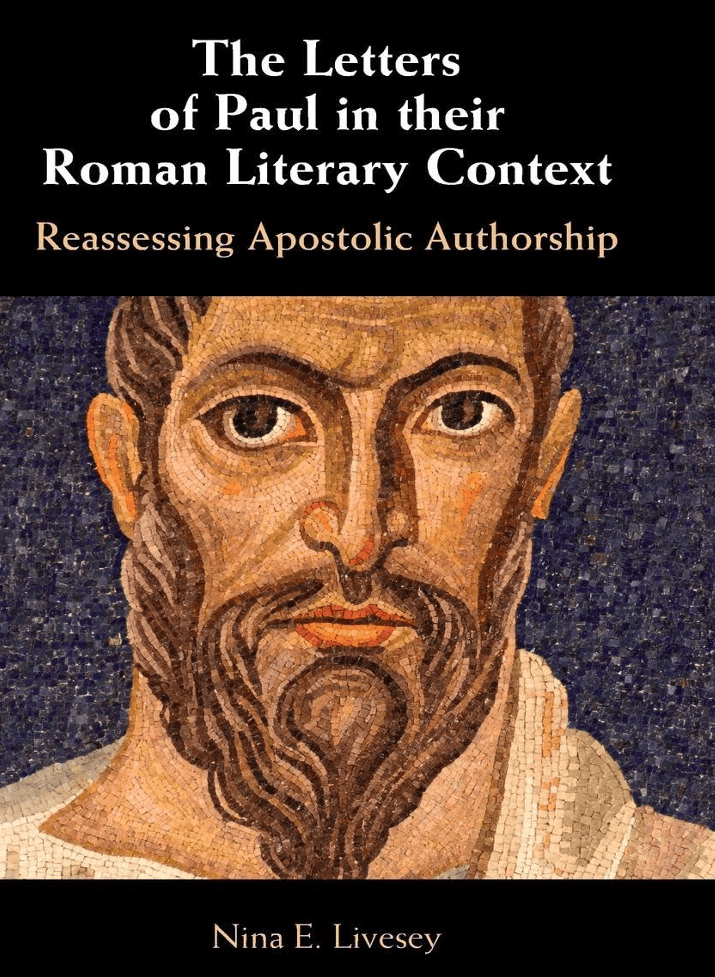
I recently finished reading Nina Livesey’s 2024 book, The Letters of Paul in Their Roman Literary Context. Her central thesis is that the seven letters of Paul widely considered by Biblical scholars to be genuine 1st century writings are instead pseudonymous compositions of the mid 2nd century. That is, the authors of the letters are pretending to be “Paul” and writing nearly one hundred years after Paul was supposed to have lived. She further argues that the likely location of the letters’ composition is the school of alleged Christian heretic Marcion in Rome. A huge amount of historical research on early Christianity would be overturned if she is correct, thus of course one would expect a lot of resistance to it.

As I noted in my previous post on her book, when I first heard of her thesis I was skeptical but intrigued. After listening to her in a couple of YouTube videos I was impressed enough to rethink my assumptions about Paul and early Christianity. It struck me that her thesis helps make sense of a couple of problems that I was already aware of.

The first problem is a chronology in which the letters of Paul precede the composition of the Gospel According to Mark, thought to have been written in the 70s of the 1st century. Paul’s letters have a higher Christology and more developed theology that Mark seems to have. It makes more sense to me that a relatively low Christology and less developed theology came first, thus Mark should have preceded the composition of the letters.

The second problem is a larger one: a chronology in which the letters of Paul precede the composition of the Acts of the Apostles, which narrates Paul’s missionary activity. If Paul was known to have written theologically dense letters that were so cherished by their recipients that they preserved them and shared them with other Christian communities, why does the author of Acts say nothing about Paul’s letters and depict speeches by Paul in which his theological views don’t match his letters? Doesn’t it make more sense that Acts was written first and the pseudo-Paul writers of the letters placed their theological embellishments into settings and situations derived from Acts?

And so I read her book. I found it to be well-documented, thoroughly researched, carefully argued, and persuasive. Her arguments against the conventional dating of the letters are, in my opinion, very strong. Her arguments for the origin of the letters in Marcion’s school are not quite as convincing, although, as she says, her thesis is a better fit of the evidence than the conventional view.

To further test her ideas I read and watched a few takes on her book from those with more expertise than me. Here the ones I found most useful so far:

Paula Fredriksen’s review delivered to the Society of Biblical Literature in 2025.

“The Letters of Paul: A Review of Nina Livesey’s New Book,” on M. David Litwa’s YouTube channel.

“Did Paul the Apostle Exist?! | Dr. Nina Livesey Vs. Dr. Bruce Chilton,” on the History Valley YouTube channel.

I also asked ChatGPT if Bart Ehrman had reviewed her book and learned he had not, but that he has comments regarding it scattered about his blog. I then asked ChatGPT to summarize his comments and it did so.

What I would say at this point is that these confirmed my initial reaction to her book. None but Ehrman take issue with her contention that a 1st century dating of the letters is weakly supported. Ehrman’s argument relies on one of the letters of Ignatius of Antioch to show early knowledge of Paul’s letters. But Livesey addressed this in her book, showing how the letters of the apostolic fathers like Ignatius and Polycarp also share the characteristics of pseudonymous “letters in form only,” which was a common genre at that time. Based on ChatGTP’s account of Erhman’s comments, I doubt he has read her book.

What they do take issue with is her alternative dating and location of the composition of the letters, and Fredrikson and Litwa make some very specific arguments here. A couple of examples. Fredriksen points out that Livesey mistakenly dates the destruction of the Jerusalem Temple, which actually happened in 70, not during the Bar-Kokhba uprising of the 2nd century, and that neither event resulted in widespread Roman antipathy to the Jewish law as Livesey states. Litwa questions why there is no evidence that anyone writing around that time expressed suspicion at the letters’ supposedly sudden appearance.

My view now is that the letters are probably pseudonymous “letters in form only,” but that producing a plausible alternative dating will require examining the contents of each letter in light of developments in the post-70 period. I no longer have enough confidence in the letters to use them as I did in examining the resurrection of Jesus, a topic I have spent much of the last year researching and writing about! I was almost done with that section of this website but now I don’t think I will finish it. The foundation of my account feels too shaky. (I will keep those pages up for the time being.)

Instead I am going to once again make a new start. This time I will interrogate early Christian history by starting with the gospel of Mark and trying to figure out where Paul’s letters best fit as I go on from there. I may find I am on the wrong track, but I am very interested in seeing if an alternative history can be produced.

What do you think?

Are Paul’s letters the earliest source on Jesus?

Okay, here’s another instance where I come across something that causes me to rethink everything I thought I knew about early Christianity.

This week I saw a couple of interviews with Dr. Nina Livesey, author of The Letters of Paul in their Roman Literary Context. The most startling takeaway from these interviews was that the Apostle Paul may have been a purely fictional character and “his” letters actually produced by someone a century after Paul was supposed to have lived. You can watch the interviews on YouTube:

Luke Invented Paul the Apostle

The Apostle Paul and His Letters Were Fabricated?

Before watching the videos I thought I would be hearing a Jesus mythicist (who does not believe Jesus was a real person) moving into Paul mythicism. I was curious about her arguments as my research on the resurrection of Jesus has shown how central the letters of Paul are to this topic.

But she does not seem to have started from a position of mythicism at all, rather she as an expert on the letters of Paul who had some unanswered questions about them. As she laid out her thinking I found her arguments to be very strong, at least compared to the arguments that Paul’s letters were written by him only about twenty years after the death of Jesus. I already knew how tenuous those arguments were, as they depend on correlating the dating of the letters with the reliability of the history in the Acts of the Apostles.

My whole picture of the development of Christianity has now shifted radically, due to these interviews and some writing on Josephus I’ve been reading. The historicity of the Acts of the Apostles is called further into question, leaving the entire period between the death of Jesus and the writing of the gospel of Mark in the dark. Paul can no longer be assumed to be a first-hand witness of the risen Jesus. Nor can we rely on his tradition in 1 Corinthians 15 about the other witnesses to the risen Jesus.

The conventional view on dating the early Christian sources and their relationships to each other has been this:
50s: letters of Paul
70s: Gospel of Mark
80s-90s: Gospels of Matthew & Luke (both using Mark) and Acts of the Apostles
90s-100: Gospel of John

My view is tentatively now like this:
70s: Gospel of Mark
80s: Gospel of Matthew (using Mark)
70s-90s: Josephus’ writings (perhaps using Matthew?)
Early 2nd century: Gospel of Luke and Acts of the Apostles (using Mark, Josephus, and perhaps Matthew), Gospel of John (using Mark, Matthew & Luke)
Mid-2nd century: letters of Paul

As you might infer, this new timeline would require revising a lot of historical research on early Christianity. This would include the pages I’ve already written on the resurrection over the last year or so!

I intend to obtain a copy of Livesey’s book as soon as I can to take a look at her arguments up close, then to read some of reviews of the book. I will then have to decide if the new timeline holds up better than the old one, and revise this website accordingly.

Lot of work, but kind of exciting to find my picture of early Christianity changing almost week by week as I pursue this project. I will certainly keep you all posted.

Appearances of the risen Jesus in Matthew’s gospel

In my previous post I explained why the gospel of Mark does not depict any appearances of the risen Jesus. In this post I move on to Matthew’s account of the resurrection appearances.

The gospel of Matthew presents two brief accounts of appearances of the risen Jesus. Both can be directly tied to particular interests of the author, indicating that they are his creation, although it is possible he knew something about Mark’s ending and adapted it to fit his own purposes. The possibility is more likely for his account of the second appearance, in which Jesus appears to his disciples in Galilee as the angels in both Mark and Matthew say he will.

In the first appearance, described in just a few verses, Jesus appears to the women on their way from the empty tomb to convey the angel’s message to the other disciples. (Mt 28:7-10) As I argued earlier on my page about the empty tomb, Matthew’s main purpose in creating the women’s encounter with Jesus is to slip in an appearance near the site of the tomb to establish that his body was resurrected and not stolen by the disciples, an accusation explicitly expressed in his gospel. He may have known that there were reports of multiple appearances of Jesus, as Paul recounts in his letter to the Corinthians (“he appeared to more than five hundred”), and so did not think an appearance to two women followers would be out of bounds for his story.

After he describes the chief priests bribing the guards to lie that Jesus’ disciples had stolen his body, Matthew abruptly jumps to Galilee with “the eleven disciples”—presumably the twelve apostles appointed by Jesus earlier in the gospel minus his betrayer Judas. This is the second, and final, appearance of the risen Jesus in Matthew’s gospel:

Now the eleven disciples went to Galilee, to the mountain to which Jesus had directed them. When they saw him, they worshiped him, but they doubted. And Jesus came and said to them, “All authority in heaven and on earth has been given to me. Go therefore and make disciples of all nations, baptizing them in the name of the Father and of the Son and of the Holy Spirit and teaching them to obey everything that I have commanded you. And remember, I am with you always, to the end of the age.” (Mt 28:16-20)

Jesus appears at a mountain, a traditional site of divine self-revelations such as to Moses on Mount Sinai; a favorite Matthean theme is that Jesus offers a new covenant for all people that goes beyond the covenant God established with the Israelites through Moses. Jesus’ instruction to his disciples to teach what he commanded echoes Moses delivering God’s commandments to the Israelites. (Deuteronomy 31:11-12; see also Mt 5:1, 21-48, from Jesus’ “Sermon on the Mount.”) The disciples worship Jesus, as the women had, emphasizing Matthew’s belief that Jesus had been exalted to a divine status, which is why Jesus can claim “All authority in heaven and on earth has been given to me.” The part of the verse in which witnesses doubt what they see is grammatically unclear and probably best interpreted as “some worshiped him, but some doubted,” perhaps a commentary on the responses of Matthew’s contemporaries the proclamation of Jesus’ resurrection. It has also been suggested that it expresses wavering belief, as when Peter tries to walk on water and begins to sink (Mt 14:29-31). (Licona, 2010: 360-361) Matthew is the only author in the Christian scriptural canon to use the Greek word “distazo” for doubt, which he uses in both passages. (Catchpole, 2000: 42)

The risen Jesus commissions the eleven to “make disciples of all nations” (literally “all peoples”). Another Matthean theme is his endorsement of the Christian mission to the gentiles. This activity was controversial among Christians at the time of Paul decades earlier, but by Matthew’s time he is comfortable indicating Jesus’ approval for the mission by reworking several passages from Mark’s gospel. (Catchpole, 2000: 43-52) Jesus’ command to baptize “in the name of the Father and of the Son and of the Holy Spirit” uses a Trinitarian formula that suggests theological development in the understanding of the relationship between God the Father, Jesus, and the Holy Spirit, and thus may be an early alteration of Matthew’s gospel by a copyist. Note though that the relation and relative status of the three is not spelled out in any explicit sense; rather the three are all brought together in endorsing baptism into the community of faith. Jesus then promises to be with his disciples “always,” until “the end of the age,” which ties back to a prophecy at the beginning of his gospel referring to Jesus as Emmanuel, or “God is with us.” (Mt 1:22-23) Matthew’s gospel ends at this point. He does not mention Jesus giving the disciples the power to forgive sins, as Jesus does in Luke and John (Lk 24:45-48; Jn 20:22-23), although Jesus himself is shown exercising this power during his life. (Matt 9:2-8) I wouldn’t make much of this difference, as Matthew probably understands the power to forgive sins as implicitly given to the disciples in Jesus’ commission.

Unlike the early appearance tradition recounted by Paul, Matthew does not mention an initial appearance of the risen Jesus to Peter. Instead he appears to those who came next in Paul’s chronology, “the Twelve” (minus Judas). I doubt Matthew knew much about the details of the appearances of Jesus reported by Paul. Instead he composed a brief collective experience focusing on Jesus’ commission to the apostles to announce God’s new covenant to “all peoples,” as the focus of the Christian mission had shifted decisively outside of Judea due to the war with Rome in 66-73 C.E.

References

Catchpole, David. (2000). Resurrection People: Studies in the Resurrection Narratives of the Gospels. Darton, Longman, & Todd.

Licona, Michael R. (2010). The Resurrection of Jesus. InterVarsity Press.
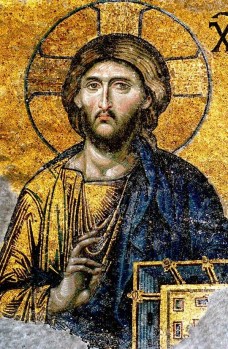
The missing ending of the gospel of Mark

Hello friends. I haven’t posted much lately because I slowed down my writing to run ahead in my reading. My reading has moved on from the resurrection to the life of Jesus. But I have been slowly finishing up my last two pages about the resurrection, and I actually finished writing about the gospel of Mark’s lack of resurrection appearances quite a while ago. Today I decided to give you that piece as I continue to work on the rest of it. Here it is:

The gospel attributed to Mark, which appears to be the earliest narrative of Jesus’ life and death that we have, ends without depicting any appearances of the resurrected Jesus. Some early copies of Mark do contain material at the end of the gospel that read like condensed versions of the appearances found in the other gospels, but manuscript and stylistic evidence have established “to the satisfaction of virtually all scholars” that this material was not written by the author of Mark. (Croy, 2003: 14) Many scholars have concluded that the author intentionally ended his story with the women discovering Jesus’ empty tomb and hypothesize reasons why he would have done so. But this flies in the face of what Mark clearly leads the reader to expect: as the “young man” at the tomb tells the women (Mk 16:7), and Jesus earlier predicts (Mk 14:28), the risen Jesus was to appear to Peter and his other disciples in Galilee.

In his study of the problem, Croy (2003) examined the arguments about Mark’s abrupt ending and defended the thesis that the both the beginning and ending of Mark’s original gospel were accidentally lost, probably by the outer page of a codex coming loose like the cover of a modern magazine. He notes that Mark is particularly fond of showing prophecies fulfilled and depicts Jesus repeatedly prophesying his own resurrection. The idea that Mark would have deliberately subverted his readers’ expectations is anachronistic; other ancient writers show no sign of such a literary strategy. It might seem like early Christians would take care that a gospel was carefully preserved and the loss of parts of a manuscript would be rectified by consulting other, intact copies. But when Mark wrote his gospel it was not considered sacred scripture or even thought of as a “gospel,” it was very likely the first narrative of Jesus’ life and meant for reading to a popular audience, not to preserve for posterity’s sake. The damage to Mark’s gospel would have happened soon after its creation and before many copies had circulated, as both Matthew and Luke, who adapt Mark’s gospel for their own use, supplement their versions with differing birth narratives at the beginning and different resurrection appearances at the end of their gospels, neither of which are found in Mark. (The gospel of John is once again a case in itself.)

I find Croy’s case definitive; Mark originally contained an account of one or more appearances of the risen Jesus, but we know next to nothing about them because of the lost pages. Likely neither did the authors of the other gospels, who had come up with their own endings without Mark to guide them. What Mark leads us to expect is that the disciples scattered after Jesus’ death (Mk 14:27), but Peter and other disciples later saw the risen Jesus in Galilee (Mk 16:7). Beyond that is pure speculation.

Reference:

Croy, N. Clayton. (2003). The Mutilation of Mark’s Gospel. Abingdon Press.

Historical evidence in favor of Christian claims

I read ahead on what I am writing about on my Jesus Reconstructed website, so the interesting things I come across have not all reached my pages yet. In this post I want to share three pieces of evidence that strike me as favoring some of the claims of Christianity.

1. Jesus as a real human being. T.S. Schmidt’s new book Josephus and Jesus: New Evidence for the One Called Christ (click for a free copy) makes a very strong case for the authenticity of the famous Testimonium Flavianum passage in Josephus’ Antiquities of the Jews. In Schmidt’s translation the passage is more ambivalent about Jesus than in other translations, and Josephus’ references to Jesus’ “mighty” words and deeds, the resurrection, and the identification of him as the Christ could have been derived from Christian sources. But as Josephus knew some of the chief priests alive in the early 1st century, or knew their immediate descendants, he would have been in a position to know if the crucifixion actually happened. Schmidt’s case, plus references to James the brother of Jesus by both Josephus and Paul, have persuaded me that the historical evidence favors the reality of Jesus as an actual human being and not, as the mythicists argue, a figure known only through visions.

2. Jesus’ self-conception. Many scholars argue that high claims for the role of Jesus in history were developed sometime after the resurrection reports, and that Jesus in his lifetime did not see himself as more than a prophet and rabbi (a teacher of the correct interpretation of the Jewish laws). Yet in Paul’s account of the last supper, Jesus said he was instituting a “new covenant.” I have not been able to find evidence of manuscript variations in his use of this phrase. This is a pretty high claim, as the last covenant God made was through Moses on Mount Sinai. Jesus is claiming that the Passover meal was now, for his disciples, a remembrance of a new covenant made by the sacrifice of his body and blood, not a remembrance of the old covenant given through Moses. This quote is evidence that Jesus himself saw his death as instituting a new phase in God’s plan for humanity.

3. The resurrection. Although I find the gospel accounts of appearances of the risen Jesus unconvincing as historical evidence, the appearances referred to in Paul’s first letter to the Corinthians carry weight as reports derived from witnesses. Lately commentators have favored explanations comparing these reports to other types of visions of deceased people, such as grief visions by survivors (Peter/Cephas and James would be candidates for this), or visions induced by mystical practices (Paul is the candidate here). These comparisons are meant to show that the visions of the risen Jesus were not unique. It is true that there are contemporary reports of realistic appearances by deceased people, including appearances to multiple people at the same time and appearances to both those who knew and did not know the departed in their lifetime. However, to my knowledge there are no other examples of appearances of the same dead person to multiple individuals and groups (especially a group as large as 500 people) at different times. This aspect seems unique. It is also far from clear if all of the contemporary incidents can be explained as purely psychological rather than actual communications from a dead person. In some reports the deceased communicates information that otherwise could not have been know to the recipient. (I experienced this myself in a dream of a former colleague who informed me he had died.) From a historical standpoint, the events behind the appearance reports in Paul’s passage remain an unsolved mystery.

As I consider all this, I find myself leaning toward the position that the historical evidence shows at least these three things: Jesus was a real person, he saw his death as instituting a new covenant with God, and the reports of his appearances after his death remain an unsolved mystery. I am surprised at this, not because I had a firm opinion about traditional Christian claims one way or the other, but because I expected the historical evidence to be inconclusive about these particular topics. Of course the Christian claims are not proven by any of this, but it does provide a historical basis for some apologetic arguments.

I don’t mind moving closer to traditional Christianity (I still have a ways to go on some issues), but I am left with a further dilemma. Which church would I join? So far I see them all as problematic. We’ll see where all this takes me.

Jane Schaberg and the empty tomb

I recently finished re-reading The Resurrection of Mary Magdalene by the late Dr. Jane Schaberg. Jane was my Biblical Studies professor when I was an undergraduate majoring in Religious Studies back in the 1980s. Although she encouraged me to pursue graduate work in Biblical Studies, I went in a different direction. We became friends and had sporadic contact over the years.

She published The Resurrection of Mary Magdalene in 2002, and I first came across it about 2005, twenty years after receiving my bachelor’s degree. This was during a period when I was “deconstructing” my Roman Catholic religious beliefs for the second time. The first time was in my teenage years when I simply discarded it as of no interest. I returned to the faith in my mid-twenties, only to deconstruct more deliberately in my late forties.

At the time I had left my academic career in political science and belatedly began to pursue a Religious Studies degree at the Graduate Theological Union in Berkeley CA, with courses and teachers from a variety of religious orientations. I wanted to take a closer look at Christian and Buddhist religious traditions to determine what each of them meant to me at that turning point in my life.

I did a lot of reading on my own, utilizing the GTU library, and it was then that I read Jane’s two major books. It was fascinating to read her work for the first time and helpful in sorting through some of my thinking about religious texts and Catholic dogmas.

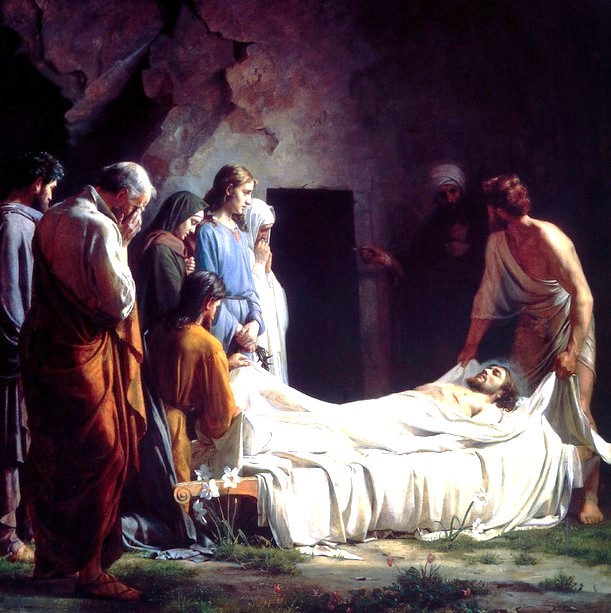
I reread her book this year, another twenty years later (!), because Mary Magdalene is a key figure in the gospel reports of the death and burial of Jesus and the discovery of his empty tomb. I felt like I was meeting Jane on an intellectual and personal level in a way I hadn’t before. It was like talking over a subject of mutual interest with an old friend.

Her unexpected gift to me was in understanding how much the figure of the “Son of Man” in Ch. 7 of the book of the prophet Daniel influenced the gospel attributed to Mark. I had to revise my page on the empty tomb once again to incorporate this insight. The empty tomb had the elements of an apocalyptic text similar to those in Daniel, with an emotionally troubled protagonist seeing something incredible, having it interpreted by an angelic figure, and then keeping quiet about it due to fear.

So I want to thank Jane for this insight, for her encouragement at different points of my life, and for her teaching me some of the basics of critical Bible study long ago. Although she died in 2012, I have encountered her again and learned from her. I don’t know whether her grave is empty or not, but I do know she is still with me on my journey.

Updated pages on the gospels and the burial of Jesus’ body

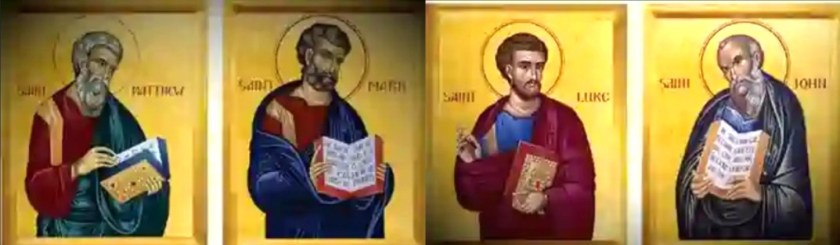
Hello out there. I’ve posted two freshly updated pages. The first is on the gospels as historical sources. The second is on what they say about the burial of Jesus’ body.

I am getting nearer to the end of my study of the resurrection. I will wrap it up with some conclusions that probably won’t satisfy anyone!

After that it is on to the life of Jesus, including addressing whether he was a real person or a myth. (Preview: I think the former.)

–Alan

Paul on resurrected bodies and his own spiritual experiences

I’ve added two newly revised pages to the Jesus Reconstructed website, one on Paul’s comments about what resurrected bodies are like and the second on practices he may have used to make himself receptive to mystical experiences.

The second one has undergone more revision than the first and has some new material. As always comments are welcome.