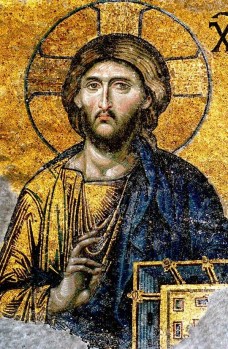
I’ve added two newly revised pages to the Jesus Reconstructed website, one on Paul’s comments about what resurrected bodies are like and the second on practices he may have used to make himself receptive to mystical experiences.
The second one has undergone more revision than the first and has some new material. As always comments are welcome.
 Jesus Reconstructed
Hi Alan,
This is a really good summary of the state of thinking and interpretation of Paul’s constructs. Thanks for putting it together.
It is difficult to fully understand what Paul is on about with his tiers of sarx and psyche and pneuma, partly I suspect because it is not a fully coherent philosophy anyway, but more probably because I am a 21st century amateur who has read a bit but operates in the context of 21st century scientific and philosophical paradigms.
The question is whether there is any sort of continuum of … being/identity … between the 3 tiers? I hesitate to say identity as that is a very 21st century concept, but the question arises due to the nature of the resurrected Jesus. Paul assumes he was a fleshly man, a sarx and psyche, but became the ‘more divine’ pneuma at his resurrection (Romans 1:3-4). But he was still Jesus.
But was he the same person? If, say, the apostle Andrew popped up to Paul’s third heaven for a look-see, would he say, ‘yep, that was the same Jesu I shared a meal with on earth’? A silly way to frame the question, but I hope it illustrates the point: are the pneumatically divinised sarxes still recognisable, or in some way the same, as their pre-ascended persons?
The question often appears as follows:
First, Jesus showed the disciples his stigmata at the various stories in Luke and John, but did Paul’s apprehension of the pneuma Jesus still have his wounds? Or can we explain this experience as a kind of halfway house: he was partly wounded flesh upon his corporeal return, but ultimately the scars disappeared as he was risen to the glory of God’s right hand.
Another focus of post-death identity occurs often around funerals – the idea that I will see my deceased husband (wife, friend etc) in heaven. Frequently accompanied by a set of mawkish images of people hugging each against a background of sacral light (or worse in a cemetery where the graves have all been opened). Or more insidious in the case of Cheryl Reid-Bartley, a pastor at Life Changing Ministries in Birmingham UK who was, in April, charged with the manslaughter of 61 year old Robert Yap, as he drowned while she was performing his baptism (in front of cameras for her congregation to see, no less). Ms Reid-Bartley is quoted as saying that she “was taken to heaven instantly to see Robert Yap… He’s young, he’s dancing with Jesus in the garden.”
I discount all these manifestations as coming from authors who were/are not cognisant of Paul’s philosophy. What is Paul saying? It is not clear – we see as in a glass darkly, mainly because it is not fully thought through.
I doubt we need to answer the question, but the value in asking it is to clarify as much as possible how Paul and his contemporaries perceived the cosmos.
The larger issue of whether Paul knew of the physical resurrection, and your analysis suggests not.
This conclusion, however, needs to address the fact that the Book of Acts squarely acknowledges a physically resurrected Jesus. After all his suffering, he ‘presented himself alive’ to the boys ‘by many convincing proofs’ over a 40-day period. So the author of Acts (who I shall call Luke for convenience) thought that Jesus popped over for a visit to earth again en route to the heavenly realms.
But despite what Luke says, did Paul think this? Paul doesn’t say so in express terms. In fact he reflects very little knowledge of Jesus’ life, aside from his death and ‘resurrection’. But if Paul agreed with Luke’s portrayal of the 40 days visitation, then Paul must have believed in a corporeal resurrection.
And that is another can of worms. When was Act written? Who wrote it? How consistent are the accounts of Paul and Luke? All that sort of stuff.
I am not one of those who see Acts as being totally irreconcilable with Paul. Yes, there are many differences, and indeed inconsistencies, between their accounts. But when I scrutinise them I find the personalities come alive, and we glean a little of what was going on. At the end of the day though, I don’t think Paul knew of Luke’s tales of the 40 days.
I haven’t fully understood all the ins and outs of the dating of Luke, but I understand that the best scholarship places it well after the missionary journeys took place. Luke seems to be a post hoc reinterpolation of the events, a recreation of what happened, written by someone who had some association with Paul, but not a fully intimate one. Someone sufficiently associated with the movement to occasion the “we” passages, but not present all the time.
Paul was not a solitary figure preaching in the synagogues and meeting halls. He also collected money and other aid for distribution to other communities of believers. He was assisted in this by a team of people, and it is possible that the author of Acts was such a person. Someone who was present sometimes, but at other times was off elsewhere delivering aid to other groups in the region. (This is the view expressed at the NINT last year by Jason Staples).
The classic focus of Act’s inconsistency with Paul is the Galatians 2 versus Acts 9&ff – when was Paul in Jerusalem and who did he meet with. This is not something I will go into detail with here, but when I read the two, the inconsistencies bring to light the personalities of both authors and the circumstances in which they lived.
However your blog focuses on the old chestnut of Galatians 2:2 – Paul going to Jerusalem “in response to a revelation”.
Every scholar I have read or watched (save for James Tabor) asks what this revelation was, and assumes it was a revelation that Paul had received. But it may not have been a revelation given to him.
In Acts 11:27-30, we read of a prophet named Agabus who predicted by the Spirit that there would be a severe famine over all the world, so the disciples determined they would send relief to the brothers and sisters living in Judea using Barnabas and Saul as the couriers.
That is, Paul went to Jerusalem in response to a revelation (prediction by the Spirit) given to Agabus.
Hence we are enlivened to a story of what was going on, who went where and what they were doing. A community receives a prophecy (or as we might say today, a weather forecast), money is raised to prepare for it, and (S)Paul and Barnabus take the funds to those who will need the aid. All interesting stuff for those of us who like this kind of stuff.
Anyway. Work calls, so I’d best sign off.
As always, love reading your blog, and thanks for being so diligent.
Rob
LikeLike
Thanks again for the comments, Rob. I do intend to get into the appearances of Jesus in the gospels and Acts, I hope relatively soon. The tip on Agabus is very helpful; I had not considered that. I will have to look into it and revise my latest page accordingly. There is also a problem with the dating of Paul’s heavenly journey. I hadn’t taken account of when each letter was written. That just occurred to me yesterday so I have some work to do on the latest page already. I will talk with you on Friday?
LikeLike