Paul on the risen Christ, part 3: Paul’s vision in context

The third part of my study of what Paul says about the resurrection is a new one. It’s based on passages that give more context to Paul’s experience of the risen Christ and his commission to preach “good news” to the gentiles. I’ve also included my conclusions from all three parts of my study of Paul’s letters.

Paul’s spiritual experiences

There are additional passages in the letters of Paul that shed a bit more light on Paul and the appearance of the risen Christ he experienced. (I will discuss the pivotal appearance to Peter on another page.) In his letter to the Christian community in Galatia Paul connected his vision of the risen Christ with his commission to preach to the gentiles. The letter starts off:

Paul an apostle—sent neither by human commission nor from human authorities, but through Jesus Christ and God the Father, who raised him from the dead… (Gal 1:1)

He then expands upon this further:

For I want you to know, brothers and sisters, that the gospel that was proclaimed by me is not of human origin; for I did not receive it from a human source, nor was I taught it, but I received it through a revelation of Jesus Christ. You have heard, no doubt, of my earlier life in Judaism. I was violently persecuting the church of God and was trying to destroy it. I advanced in Judaism beyond many among my people of the same age, for I was far more zealous for the traditions of my ancestors. But when the one who had set me apart before I was born and called me through his grace was pleased to reveal his Son to me, so that I might proclaim him among the gentiles, I did not confer with any human, nor did I go up to Jerusalem to those who were already apostles before me, but I went away at once into Arabia, and afterward I returned to Damascus. (Gal 1:11-17)

In writing that he was set apart before birth, Paul alludes to words of the prophets Isaiah (“the Lord…who formed me in the womb to be his servant”) and Jeremiah (“before you were born I consecrated you; I appointed you a prophet to the nations”) in the Jewish scriptures. Like the prophets he claims a divine mandate for his mission, asserting that his commission as an apostle came directly from Jesus and God and not through the original apostles in Jerusalem. According to Paul his commission and the message he preached stemmed from a revelation of Jesus to (or “in”) him, presumably referencing the appearance of the risen Jesus he lists in his letter to the Corinthians. Either the risen Jesus commissioned Paul and delivered the message he was to preach during his appearance to Paul, or Paul in his subsequent reflections on the appearance interpreted it as a commission to preach “the gospel” he proclaimed to the gentiles (gospel is Greek for “good news).

As a former persecutor of the early church, he would already have known their basic message that Jesus was the Messiah (Christ) and that he had been raised from the dead. Indeed, it is likely this message was a source of Paul’s opposition to the movement. Thus that would not have been the “gospel” he says he did not receive from a human source. In my judgment I don’t think it is warranted to assume Paul is saying Jesus announced to him that he, Jesus, was the Christ and had risen from the dead. Rather, the “good news” Paul was given to proclaim was the same one that gave him his mission: that the gentiles were being welcomed into the salvation offered by Christ. The appearance of the risen Christ caused Paul to accept what the Christians had already been preaching, but the gospel he was given had to do with Jewish scriptures that pointed to the gentiles turning to God in the end times.

Paul goes on to write that three years later he met Cephas and James in Jerusalem for the first time, and:

Then after fourteen years I went up again to Jerusalem with Barnabas, taking Titus along with me. I went up in response to a revelation. (Gal 2:1-2)

Note that it was seventeen years after his commissioning that he returned to Jerusalem. (His first visit was three years after the commissioning and his second visit another fourteen years later.) He returned there, he writes, “in response to a revelation.” He gives no indication as to whether this revelation came from another appearance of Jesus, from an auditory but not visual manifestation, via some kind of inner impulse he regarded as God-inspired, through a prophetic message from another Christian, or in some other fashion. It would not seem to have been another visual appearance, as in his letter to the Corinthians he characterized that appearance of the risen Jesus to him as the last appearance in a series: “Last of all… he appeared also to me.” However one interprets this later revelation, it shows that his communications from Jesus continued beyond his initial experience.

In his Second Letter to the Corinthians Paul reveals another type of spiritual experience:

I know a person in Christ who fourteen years ago was caught up to the third heaven—whether in the body or out of the body I do not know; God knows. And I know that such a person—whether in the body or out of the body I do not know; God knows—was caught up into paradise and heard things that are not to be told, that no mortal is permitted to repeat. (2 Cor 12:2-4)

Commentators agree that Paul is writing indirectly about himself in this passage. (Segal, 2004: 408) It is not clear whether his journey to the “third heaven” and the one to “paradise” were the same experience or two different ones. The “fourteen years ago” would place this some time after Paul’s initial experience of the risen Jesus but before the revelation that sent him to Jerusalem for the second time. The passage confirms that he had a series of spiritual experiences, not just one, and thus suggests that he may have cultivated a receptivity to such experiences through some type of mystical practices, such as those of the later Jewish rabbis, the heirs of the Pharisaic tradition. (Segal, 2004: 409-410) I will have more to say about this below.

After a few intervening lines Paul continues:

Therefore, to keep me from being too elated, a thorn was given me in the flesh, a messenger of Satan to torment me, to keep me from being too elated. Three times I appealed to the Lord about this, that it would leave me, but he said to me, “My grace is sufficient for you, for power is made perfect in weakness.” (2 Cor 12:7-9)

It is unclear whether the message about grace being sufficient was a part of the ecstatic experience(s) or Paul is connecting two different events. But again this passage confirms that Paul believed he continued to receive messages from Jesus long after his initial experience of the risen Christ.

As mentioned above, Paul’s reference to his heavenly journey(s) suggests that he may have engaged in deliberate practices that would make him receptive to spiritual experiences such as visions. The Greek word he uses for “revelation” in Galatians is apokalypsis, the same word used to identify a genre of ancient Jewish literature in which human beings ascend to heavenly places and return to reveal what they learned there. This literature includes the Biblical books of the Jewish prophets Ezekiel and Daniel and the Christian book of Revelation, as well as a host of other writings less well known today. (Segal, 2004: 405-416) Commentators often treat the kinds of unusual experiences recounted in these writings as a literary device to convey a message to select readers in coded language, but Paul’s heavenly journeys challenge this assumption. It may be that the authors, or at least some of them, actually engaged in methods meant to induce altered states of consciousness. These methods could include ascetic practices, intense concentration in prayer, the repetitive singing of hymns, and even psychotropic drugs. A resulting experience would then be interpreted through the influence of familiar religious texts, using similar symbologies and sometimes innovating with the introduction of new concepts, interpretations, or messages from God. (Segal, 2004: Ch. 8; Pilch, 2011: Chs. 2-4)

These additional passages in letters of Paul put his experience of the risen Christ into a larger perspective. As would be expected of a Pharisee zealous for his Jewish traditions, Paul was well-versed in the scriptures and skilled in arguing from them. As an enemy of the Christians he would have paid close attention to the scriptural references they used to prove that Jesus was the Messiah in order to refute them. He surely knew the scriptural passages about the gentiles turning to the true God in the end times. These issues would have preoccupied him, and he likely prayed for God’s guidance in wrestling with the Christian arguments. Psychologically he was prepared to receive an answer. He probably engaged in practices meant to increase his receptivity to visions and messages from God, as the appearance of Jesus was only one of several spiritual experiences he had, and possibly not the first one. But this one had two distinguishing features. First, he experienced an appearance of the Jesus the Christians said had been raised from the dead, a figure who had certainly been on his mind. And second, he believed this appearance had commissioned him to preach to the gentiles that they were being welcomed into the kingdom of God.

Conclusions

In his First Letter to the Corinthians, Paul transmitted a carefully preserved Christian tradition indicating that Peter was the first to claim to have seen the risen Christ, followed by an appearance to “the twelve.” The prominence of Peter in the early Christian community aligns with this tradition. Paul was aware of several other reports of appearances but these are not attested in any other source. He also experienced an appearance himself. The nature of a resurrected body was a controversial issue among the Corinthian Christians. In trying to explain what a resurrected body is like, Paul rejected the common idea that it would be our familiar flesh and blood body restored to life while at the same time maintaining the Pharisaic and Christian belief that there is continuity between the body that dies and the body that rises in its glorified form. Paul had other spiritual experiences, including continued messages he believed came from Jesus. He may have engaged in practices meant to make him receptive to visions and messages from God. As a persecutor of the Christian community he would have been asking God for guidance in using the Jewish scriptures to refute the Christians; this preoccupation was the context in which he experienced an appearance of the risen Christ. This appearance convinced him that he had been commissioned him to preach to the gentiles that the way to salvation had opened to them, mirroring passages in the scriptures that seemed to predict this happening in the end times.

Sources cited

Pilch, John J. (2011). Flights of the Soul: Visions, Heavenly Journeys, and Peak Experiences in the Biblical World. William B. Eerdmans Publishing Company.

Segal, Alan F. (2004). Life After Death: A History of the Afterlife in the Religions of the West. Doubleday.

Paul on the risen Christ, part 2: What is the resurrected body like?

Hello, it’s been a few weeks since my last post. I have continued to do research on the resurrection and editing multiple drafts of my write-ups on what I am learning and thinking about it. Here is the section which follows my last post. That one was about Paul’s list of the appearances of the risen Christ in his first letter to the Corinthians, and this one is about his discussion of the nature of the resurrected body in that same letter. This will be the second of three parts on what Paul has to say about the resurrected Christ. I am near finished with the third part, which is entirely new.

This section today starts with where the last post ended, that Paul knew of multiple reports of appearances of the risen Christ.

What are resurrected bodies like?

Nowhere does Paul describe what any of these appearances were like, including his own experience. The Greek verb translated “appeared to” or “was seen” (ōphthē) implies a visual experience. A Greek translation of the Jewish scriptures which was widely used by early Christians utilizes the same Greek verb for the visual manifestations of God or angels to figures such as Abraham, Moses, Elijah, Isaiah and Daniel. (Segal, 2004: 406) If Jesus was seen, was he here on earth or in a vision of the heavens? Did he look recognizably like the pre-death Jesus or different in some important way, such as with a luminous face? (See 2 Corinthians 4:4-6) Did they hear his voice along with a visual appearance? Did they touch him? Did he handle any objects? Where did he come from and where did he go? Paul says nothing to satisfy our curiosity.

We do have a slight clue as to Paul’s understanding of what the resurrected Jesus was like. Later in his letter to the Corinthians Paul attempts to answer a question: “How are the dead raised? With what kind of body do they come?” His answer is not very clear, except to emphasize that our “perishable,” dishonorable and weak ordinary body will be categorically different from our “imperishable,” glorious and powerful resurrected body. The Greek terms he uses for the bodies before and after resurrection are sōma psychikon and sōma pneumatikon, sometimes translated “physical body” and “spiritual body.” However, the words sōma, psyche, pneuma and their derivatives, along with a number of other words Paul uses to talk of the components of human beings, are not easily translatable into English. Not only are our concepts of the composition of a human being different from Paul’s, such words are usually not used with a high degree of precision either in ancient or modern times.

A half century ago Robert Gundry, challenging the famous Biblical scholar Rudolf Bultmann’s existentialist interpretation of the resurrection, analyzed uses of such words in first century literature in the eastern Mediterranean, focusing in particular on sōma. (Gundry, 1976) He demonstrated that sōma primarily means a physical body, although it can also stand for the entire human being–but always including one’s physical body. Thus both sōma psychikon and sōma pneumatikon imply a physical body. The modifier psychikon has the same root as psychology, referring to the inner life of a person; psyche is often translated as “soul.” The other modifier, pneumatikon, is based on the word pneuma, which can mean “breath” or “spirit.” According to Gundry, Paul is not contrasting a material human body to some kind of incorporeal “body.” He is contrasting two types of physical bodies. One type of physical body is animated by a person’s soul, an “ensouled body,” as Alan Segal puts it (Segal, 2004: 429), that is, a live human being as we ordinarily know them. The other type of body is still physical but transformed in some mysterious way excluding “flesh and blood” (1 Cor 15:50), something inconceivable based on our ordinary experiences of physical bodies.

Nineteen years after Gundry, Dale Martin did an extensive analysis of the First Letter to the Corinthians in the context of ideas about bodies and life after death which were contemporary with Paul. (Martin, 1995; especially Ch. 5) The material body/immaterial spirit duality which is now taken for granted was not a feature of that culture. The general view of the Greek and Roman philosophers was that living human bodies are composed of a hierarchy of various substances, all of them material, but some denser like the earth, while others are less so like the air. At the bottom of the bodily hierarchy was sarx, roughly meaning flesh. Higher on the hierarchy was the psyche, which could be denser or more refined, depending on whether an individual was more inclined to desires shared with animals or to the pursuit of philosophical contemplation. At death the psyche separated from the flesh into their individuated substances, the psyche, if highly refined, persisting in existence, while the flesh decomposed into the earth.

For Paul the hierarchy went from sarx, to psyche, to pneuma at the highest level. Pneuma was regarded as the very refined substance of divine beings such as angels. Paul writes that “the first man, Adam” came to be a psychē zōsa (“living soul”) while “the last Adam,” meaning Jesus, became a pneuma zōopoioun (“life-giving spirit”) (1 Cor 15:45). Paul, according to Martin, expected the resurrected body to shed both sarx and psyche and to be composed of the remaining substance pneuma. Paul’s interlocutors were likely the more educated members of the Corinthian church who would have been familiar with Greco-Roman philosophical ideas and opposed to the notion that a corpse, with its heavy, dense substance of flesh, could be raised to a higher life in heaven. The less educated commonly thought of resurrection as portrayed in myths and legends of people who died and then returned to life in the familiar form of bodies pretty much as we know them. Paul agreed with the educated that “flesh and blood” could not inherit the kingdom of God, but wanted to maintain the Jewish position of the Pharisees, a sect he once belonged to, that there is a continuity between the body that dies and the body that is resurrected. He was especially concerned to bring the two factions of the Corinthian Christians into harmony by urging the more educated to tolerate less sophisticated views.

It is easy to see why the nature of the resurrected body was controversial among the Corinthians. To this day commentators argue about what Paul was trying to describe with his language about bodies, souls, and spirits. (See, for example, Bryan, 2011: 217-220) But how would Paul know any of the things he says about resurrected bodies? Would seeing an appearance of the risen Jesus convey what kind of substance his body was composed of, or how refined that substance was? Or how it was related to the body that had died? Paul was pressing into service what language was available to him to try to fit the appearances of Jesus within the context of first century views of human bodies, death, and resurrection.

As a Pharisee he would have been committed to the idea of a general resurrection at the end times, during which God would raise human beings back to their ensouled bodies for the final judgment. Early Christians, like many Jewish people of that time, shared this view, and they would have understood the appearances of Jesus through that lens. Apparently Paul’s experience of the risen Christ, and what he knew about the appearances to others, was not compatible with the uneducated person’s expectation of corpses literally recomposing and resuming life in the body they had before. In his letter to the Corinthians he struggles to explain how the resurrected body could be the same person yet in a very different form from than that of the body before death. Trying to tie these two things together—Jewish ideas of the general resurrection and what people saw in the appearances of Jesus after his death—was a challenge, and, as we will later see, a continuing source of controversy among the early Christians.

Sources cited

Gundry, Robert H. (1976). Sōma in Biblical Theology with Emphasis on Pauline Anthropology. Cambridge University Press.

Martin, Dale B. (1995). The Corinthian Body. Yale University Press.

Segal, Alan F. (2004). Life After Death: A History of the Afterlife in the Religions of the West. Doubleday.
Paul’s list of the appearances of the risen Christ, part 1

Here is the first of two parts from my near final draft about Paul’s list of the appearances of the risen Christ in 1 Corinthians 15. There is additional material compared to the version now up on this website, but I reach the same conclusions. Comments and notice of typos are very much welcome.


3b. Paul’s list of Jesus’ appearances

The earliest Christian documents we have copies of are probably the letters of Paul to various Christian communities around the Mediterranean. Dating such documents is tricky, but the academic consensus is that he wrote most of them in the decade of the 50s C.E. That would be about twenty years after the presumed date of the death of Jesus and about fifteen years or more before the earliest gospel we know of, the one attributed to Mark. In other words, about mid-way in the approximately three or four decades between the reports of the resurrection and the first written narrative of Jesus’ life. Much of what we know about Christianity during those decades comes from the letters of Paul.

The Christian Bible contains thirteen letters attributed to Paul, but Biblical scholars regard only seven of them as genuinely written by Paul. His letters do not show much interest in Jesus’ life, focusing instead on the meaning of his death and resurrection and offering instructions to the communities he wrote to. Paul expected the end of the world as they knew it and the triumph of the “kingdom of God” to happen in the very near future, so his eyes were on the present and his mission of preaching to the non-Jewish Gentiles while waiting for the imminent return of Jesus as judge and ruler of all. (On another page of this website I will discuss Paul’s letters, the dates assigned to them by scholars, and why only some are regarded as genuine.)

Paul’s list of appearances of the risen Christ

In what is called his First Letter to the Corinthians Paul bequeaths us some information about the resurrection appearances of Jesus:

For I handed on to you as of first importance what I in turn had received: that Christ died for our sins in accordance with the scriptures and that he was buried and that he was raised on the third day in accordance with the scriptures and that he appeared to Cephas, then to the twelve. Then he appeared to more than five hundred brothers and sisters at one time, most of whom are still alive, though some have died. Then he appeared to James, then to all the apostles. Last of all, as to one untimely born, he appeared also to me. (1 Cor. 15: 3-8, all English translations from the Greek here are from the New Revised Standard Version Updated Edition of the Christian Bible)

Paul’s language of handing on and receiving information of “first importance” implies carefully passing down a tradition with a set verbal formulation. That formulation starts with the kernel of Paul’s missionary message, that Christ died for our sins as predicted in the Jewish scriptures, that he was buried, and that God raised him from the dead, again as predicted in the scriptures. There are several shorter statements about Jesus being raised from the dead scattered throughout Paul’s letters, also likely of earlier origin. (Lüdemann, 2004: 32-33; Allison, 2005: 229-231) In this particular passage Paul goes on to include a list of appearances of the risen Jesus: to Cephas (which roughly means “man of stone” in Aramaic, as does “Peter” in Greek), “the twelve” (apostles), five hundred Christians at one time, a “James” with no further identification, “all” the apostles, and then finally Paul himself. Dale Allison (2005: 234) notes that the formula uses words and expressions that Paul does not use elsewhere in his letters, such as “sins” in the plural, “according to the scriptures,” “has been raised” in the perfect tense, “appeared to” (or “was seen by”), and “the twelve.” This is another sign that he is passing down an earlier tradition.

But is the traditional formula exactly as Paul has conveyed it? The comment regarding the five hundred, “most of whom are still alive, though some have died,” would be Paul’s, as a tradition composed to be carefully handed down would not indicate whether witnesses were still alive at a particular time. And consider that Paul includes himself at the end of the list. Elsewhere he confirms that he is a first-hand witness to an appearance of Jesus (1 Cor 9:1-2), but would an earlier tradition been have passed down to him saying that Paul himself was “last of all, as to one untimely born”? (The phrase “one untimely born” compares his experience to the abortion or miscarriage of a pregnancy, apparently meaning something that occurs before one is ready for it. See Wright, 2003: 327-329) Why would the originators of the tradition think he was last and why would they bother to describe his experience as untimely? I don’t think it’s likely they did; it is more likely Paul added himself to the end of the traditional list to defend his claim to be an apostle, despite not having been one of those originally recognized as apostles.

This raises the question of where the traditional list ends and Paul’s addition(s) begin: just before Paul is listed or at some point before that? It is important to note that Greek was written without punctuation at that time, so translators to modern English have to guess where sentences begin and end. The problem of where exactly the original tradition ended was in discussion as early as 1978 (Allison, 2005: 234), with most commentators holding that it ended either with “Cephas” or with “Cephas, then the twelve.” (Barclay, 1996: 16) Bart Ehrman (2014: 139-142) is among those who argue that it ends after the mention of Cephas. That would leave a formulation with a parallel structure easy to remember and convey to others:

Christ died/for our sins/in accordance with the scriptures/and he was buried.

Christ was raised/on the third day/in accordance with the scriptures/and he appeared to Cephas.

The first section in each line is a parallel statement about Christ (he died/he was raised). The second section ties the statement to a prophecy derived from the Jewish scriptures (for our sins/on the third day). The third section is exactly the same in each line (in accordance with the scriptures), following up the previous section. And the final section is a brief conclusion (he was buried/he appeared to Cephas). It is a tightly constructed set of parallel statements, which would be asymmetrical if much more was added after the mention of Cephas. That would suggest that the rest of the list was added by Paul from some source(s) other than the tradition as it had been handed down to him.

If this argument is correct, the tradition would be the earliest source concerning who was the first to claim to have seen Jesus after his death: Cephas/Peter. Peter as a key witness to the risen Christ fits other evidence that Peter was a central figure in the early Christian community, such as Paul’s reference to him as a “pillar” of the Christian community in Jerusalem in another letter (Galatians 2:9), his prominent role in the gospels (four Christian scriptures narrating the life, death and resurrection of Jesus) and the Acts of the Apostles (a history of the early Christian community), and letters to early Christian communities that were purported to have been written by Peter. In the gospel of Luke there is also an indication that Peter was the first to take heart after the death of Jesus, as predicted by Jesus (Simon was Peter’s original name before he was renamed Cephas/Peter):


“Simon, Simon, listen! Satan has demanded to sift all of you like wheat, but I have prayed for you that your own faith may not fail, and you, when once you have turned back, strengthen your brothers.” (Lk 22: 31-32)

I am not arguing that all of these stories about Peter were true, but rather that he was important enough to have such stories told about him. Based on the evidence, I think Peter was the first to experience what he took to be a resurrected Jesus, and that his claim was carefully preserved and handed down in the larger Christian community. I don’t think we will ever know exactly what Peter saw, but apparently it was convincing enough to bolster his confidence and become a turning point for him, for the other early disciples, and for the rest of Western history.

The subsequent mention of an appearance to “the twelve” also may have been a part of the original tradition. Its inclusion would not disrupt the balance of the parallel structure of the original list very significantly. Gert Lüdemann (2004: 40-43) takes the position that the “twelve” was part of the original list. He notes that the conjunction between “Cephas, then (eita) to the twelve” differs from the conjunction that precedes the sentence about the five hundred and the one about Jame and all the apostles. That word in Greek is epeita, which Lüdemann translates as “thereafter.” As I recount on another page, three of the gospels and the Acts of the Apostles all describe scenes of Peter with other apostles seeing the risen Jesus. These likely trace back to knowledge of the tradition Paul recounts.

The other appearances on the list, aside from Paul’s own experience, would then be appearances that Paul learned of after receiving the original tradition. You would think five hundred people seeing the resurrected Jesus at the same time would be dramatic enough that reports of it would reach those undertaking to write about Jesus, but there is no mention of it in any other source. A suggested reference to the appearance is in the Acts of the Apostles. (Lüdemann, 2004: 73-81; Allison, 2005: n. 140 on 235) The Acts is a narrative of the early Christian community which is universally attributed to the author of the gospel of Luke. In Acts Chapter 2:1-42 the disciples are gathered together on the feast of Pentecost, celebrated fifty days after the Jewish holiday of Passover, which the gospels depict as the time of Jesus’ death. They are “filled with the Holy Spirit” and begin speaking in other languages, which Jewish people from around the eastern Mediterranean who are present in Jerusalem hear and recognize. After Peter preaches to them, “about three thousand” are baptized and join the Christian community. But other than a miracle and the huge size of the crowd in Paul’s list and in the story, there is little resemblance between the two. In one the miracle is an appearance of the risen Jesus, in the other it is speaking in various languages under the influence of the Holy Spirit. (Wright, 2003: 324-325) And three thousand is a lot more people than five hundred.

Nor is there any other mention of an appearance to James in the early sources, unless this was James the apostle and he saw Jesus as one of several unnamed apostles present at one of the appearances to disciples depicted in the gospels. The lack of identification in the formula suggest he was a known figure in the Christian community. Most commentators take James to be “James, the Lord’s brother” that Paul refers to in Galations 1:18-19 and is presumably also the James who Paul calls a “pillar of the church” along with Cephas and John in Galations 2:9. James’ status suggests he had claimed to see the risen Jesus, but this is not made explicit in any early source. Who “all the apostles” were and what they claimed is also unknown.

In my judgment, Peter is the only person on Paul’s list whose experience, whatever it was, is convincingly attested as widely known and carefully handed down by the early Christians. His experience was the foundation for the belief in the resurrection of Jesus and the catalyst for other reports of appearances. Once the idea of the resurrection took hold, additional reports would have a ready audience among those who believed, no matter the substance of the reports or their lack of it. Paul may not have heard about these other reports until years later, nearer the time he added them to the end of the traditional list when he wrote to the Corinthians. The reports could have been second-hand or even more remote from the alleged events.

Changing my mind on the resurrection

Hi there. Honestly, I didn’t go into this study of the resurrection of Jesus with a desire to confirm either that it did or did not happen. I wanted to make the strongest case possible against it to see how well that case stood up. Depending on how strong it seemed, the resurrection would be either more or less defensible. My own viewpoint was that I had no idea what really happened, but it would be nice to have my mind more settled on the question.

Well, as a result of all of this reading and thinking my viewpoint is shifting. Not that I think there is proof, but that I think it is intellectually defensible to believe that Jesus really appeared to some of his disciples in some kind of bodily form after his death. Of course, that requires more than an analysis of the evidence to accept. It requires a worldview which won’t suffer too much violence to fit in such an event.

Here are a few of the things that made a difference.

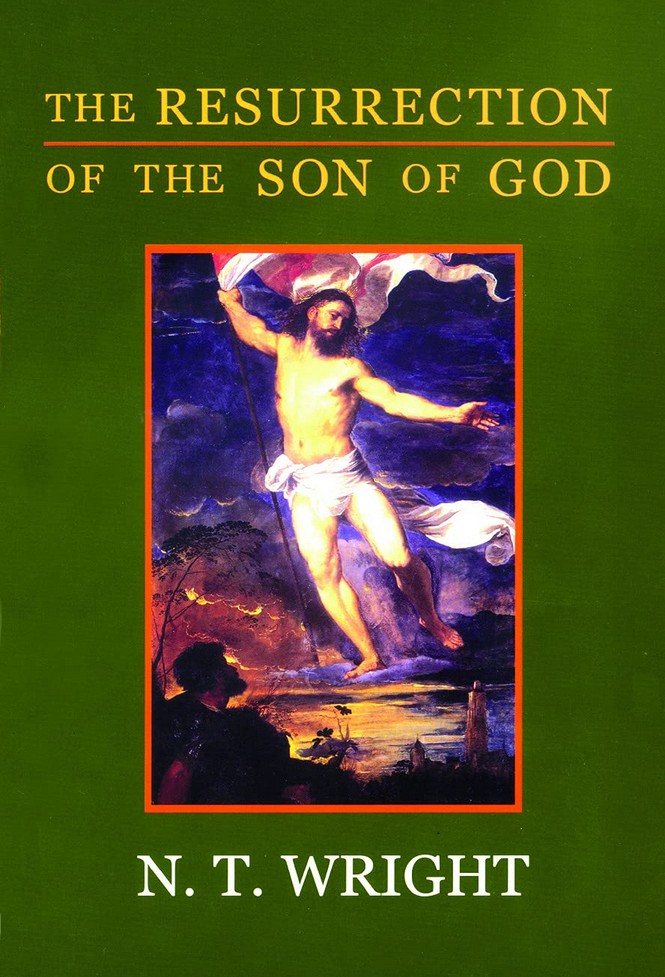
N.T. Wright, in his (massive) book “The Resurrection of the Son of God,” asks the question: how can you explain the early Christians’ adoption of the idea of a two-stage resurrection–first Jesus, then everyone else–unless the disciples were absolutely convinced that they saw Jesus again after his death? Most first-century Jews seemed to believe in one resurrection, the one with everyone at the end of the age. How did the two-stage idea come to be?

His answer is that it could only have happened if they were absolutely convinced Jesus rose from the dead, even though the rest of the deceased were not yet showing up. And they would only be convinced by both the empty tomb and the multiple appearances of Jesus. One without the other would not be enough. An empty tomb would be a mystery. Appearances would be visions, like the frequently reported visions of a dead person that people do have. Only both meant a resurrection had happened.

I am not sure that argument holds up. I think an expectation that the general resurrection was imminent, plus the appearances of Jesus, would be sufficient for them to come up with a two-stage concept. But it did cause me to think about the oddity of the combination. Chronologically, it makes sense to me. First a belief that resurrection is about to happen, then the appearances, and you get a resurrected Jesus. But look at it in reverse. How likely is it not only that multiple appearances of the same dead person are reported (as in Paul’s First Letter to the Corinthians), but that a belief in an imminent resurrection happens to have been accepted by them beforehand?

That is what struck me. The widespread expectation of a general resurrection just happens to have developed among first century Jews before the disciples of Jesus start having visions of him? Strange historical happenstance. No other culture held such a view, expect maybe in Persia, although that is disputed.

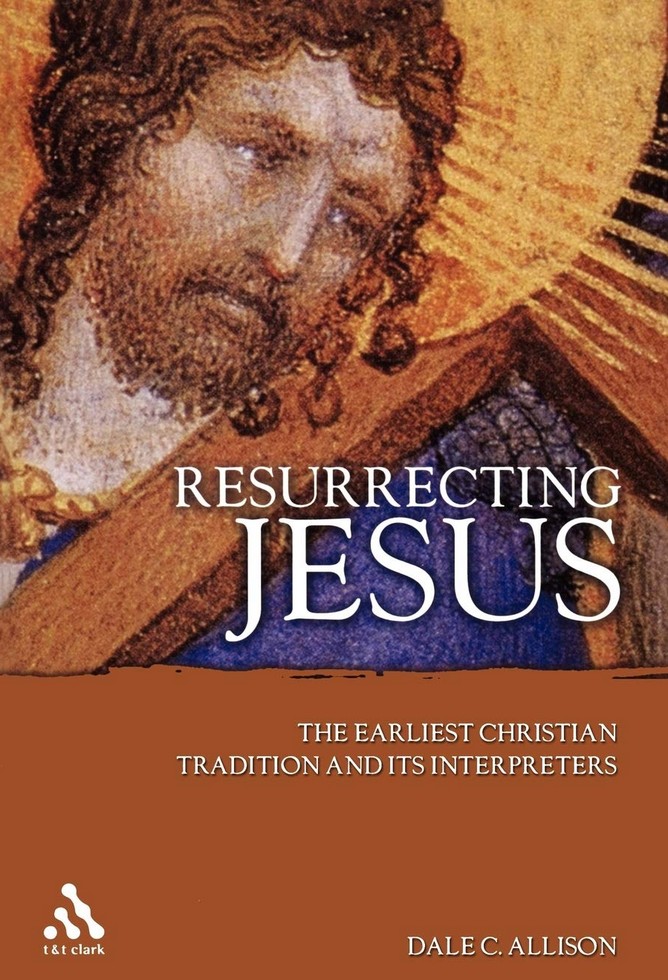
Just last night I finished Dale Allison’s exhaustive review of the literature on the resurrection in his book, “Resurrecting Jesus.” He presents a lengthy discussion of visions of the dead in modern times, with an abundance of footnotes. People have experiences of dead people present again. The deceased seem very real to them. Groups of people can experience this at the same time. Occasionally they not only see a deceased person, they touch the person. All that makes even the gospel accounts of Jesus’ appearances more credible.

That was not news to me. But what Allison also had was a discussion of the arguments pro and con the finding of an empty tomb. Up to now (and still on my page about the resurrection on my website) I have regarded the empty tomb story as a literary fiction by the author of the gospel of Mark. Allison presented a couple arguments that provoked me to rethink this. Part has to do with burial practices for crucified criminals (it was not uncommon to bury them) and part has to do with the reality of Joseph of Arimathea and Mary Magdeline and their roles in the drama. I am still in the process of thinking through these arguments.

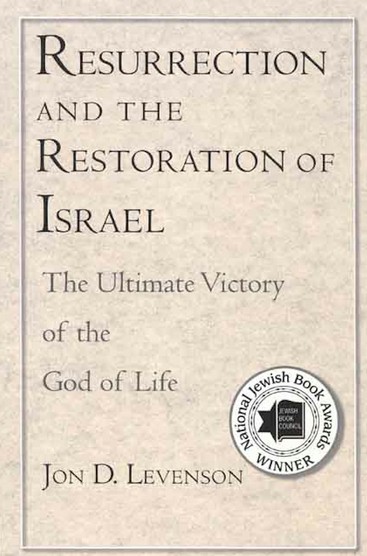
Finally, a few months back I read a book by a Jewish author, Jon D. Levenson, “Resurrection and the Restoration of Israel.” Levenson wasn’t writing about Jesus. He was defending the belief in the general resurrection as compatible with Jewish beliefs before the period of the Second Temple. For example, belief that creation is good, that God intends justice to be done, and that human life matters. All of these are beliefs I share, so his presentation made me want to believe in a bodily resurrection. His book shifted me from seeing resurrection as irrelevant to how I live my life, to an important potential buttress to beliefs I already hold dear. I think that prepared the ground for me to be more open as I considered the question. It wasn’t only about belief in what really happened at the start of Christianity, it was about how that belief could fit in with a worldview I already hold.

So that is where I am at. I am about done with reading and about to start writing up my thoughts, which is going to take many more pages than I currently have up on this site. I will let you know as I get the new pages up.

Thanks for your interest.

–Alan

Was There a Passion Narrative Before Mark’s?

I recently took down my page about the crucifixion of Jesus because I decided I should not take the historicity of Jesus for granted in my writings on this website. In these times that is something that needs to be demonstrated rather than assumed, and I am looking into how persuasive a case can be made.

But if you had read that page, you may remember that I thought it likely that “Mark,” the author of the earliest gospel (that we know of), drew upon an oral tradition or maybe a written account of the events from Jesus’ arrival in his final visit to Jerusalem through his crucifixion. Subsequent to examining the gospel accounts and writing up my findings, I obtained a book on the subject by the well-regarded Biblical scholar Raymond Brown. This provoked some new thoughts that I want to share with you now that I’ve finished reading it.

The book is thirty years old, and so does not incorporate more recent research, but it is highly detailed and well versed in the research up to that time. Brown had a sterling reputation as a rigorous scholar. He was also a Catholic priest, and although often criticized for questioning the historical basis of certain claims of the the church, he was not one to question the real existence of Jesus or the central dogmas of Christianity. For these reasons I found what he had to say in this book especially interesting.

Much of the book was a line by line comparison and commentary on latter parts of the passion accounts in four canonical gospels and the less-known Gospel of Peter. I confess I skimmed much of that material. But as the second of his two volumes it also included several appendixes with studies of particular aspects of the topic. It was a couple of these that I found revealing.

The first is Appendix VII, “The Old Testament Background of the Passion Narratives.” In this section Brown gives a thorough listing of every passage in the Jewish scriptures that the gospel passion narratives seem to refer to. There are dozens of them, which raises the question of whether Mark’s narrative was created from what he regarded as prophecies in the Jewish scriptures rather than any pre-existing oral or written account of the passion events. Brown rejected the theory that Mark based his narrative purely on an imaginative reflection on the Jewish scriptures. But he conceded that those scriptures “influenced heavily early Christian presentation of the passion” in order to expand “the preaching outline into dramatic narratives.” In other words, Mark probably knew a basic outline of what happened to Jesus at the end of his life but created much of what he wrote about it as an exegesis of those scriptural passages.

The second is Appendix IX, “The Question of a PreMarkan Passion Narrative.” This was written by Martin L. Soards and edited by Brown for this book. Soards goes thr0ugh a long list of scholars who examined the question of whether there was a pre-existing passion narrative that Mark drew on, examining their methods and findings. He concludes that there was such a narrative, but that discovering what was in it “may finally be an impossible” task. His reason for thinking there was one is based entirely on Mark’s mention of “Judas, one of the Twelve,” in his passion account. Soards asks why Mark would feel it necessary to identify Judas when he had already brought up Judas earlier in his gospel. His answer is that Mark must have relied on an earlier account in which this was the first mention of Judas. That sounds pretty tenuous to me.

What was striking was that Brown, who fully accepted the historicity of Jesus, indicated by publishing these two appendices that much (most?) of Mark’s account of the passion events was creative exegesis and that it was near impossible to recover the historical events behind it. This back in 1994, long before any mythicist arguments about the historical Jesus had become widely known. It reinforces my belief that I was correct in deleting several of my pages so that I can avoid assuming Jesus’ historicity before taking a more careful look at the problem.

Thanks for joining me on this journey! As always, I welcome your comments on this blog post.

Elaine Pagels’ new book; plus another argument vs. “mythicism”

Over the last couple of days I tore through Elaine Pagels’ new book, Miracles and Wonder: The Historical Mystery of Jesus. Pagels is well known for her work on early Christianity and especially her work on the Gnostic Gospels found at Nag Hammadi. The new book is meant as a culmination of her reflections about Jesus, both as a scholar and as a human being long interested in spirituality and religion. I always enjoy reading about someone else’s spiritual journey and how it may have points of intersection with mine. Miracles and Wonder is an easy read, aimed more at the general public than at scholars.

Nothing in the book changed my mind about Jesus as an historical figure, although there was some information I wasn’t aware of. I will have to go through it again more carefully and take note of points of special interest. I did notice she still talks about the Christian “communities” that the writers of the gospels were supposedly addressing, without mentioning new research such as that of Robyn Faith Walsh showing how the authors more likely were addressing a literate audience curious about Christians. Walsh did not appear in her bibliography.

I was also surprised to see her name check the late Jane Schaberg, a former professor of mine at the University of Detroit when I was an undergrad majoring in Religious Studies. Pagels relates how she and other scholars of early Christianity ignored Schaberg’s 1987 book The Illegitimacy of Jesus: A Feminist Interpretation of the Infancy Narratives, because they assumed the book was a “hostile polemic,” but that she regrets now that hasty assumption. I read the book about twenty years ago, during an earlier phase of my periodic immersion in questions on the historical Jesus, and found it, as I expected, to be a work of careful scholarship. I know from Schaberg, who I became friends with, that she received hate mail and death threats from people on account of that book.

So I recommend Pagels’ book as worth reading as a kind of combined spiritual autobiography and summary of widespread views among scholars about Jesus from an historical perspective. It doesn’t break any new ground or go very deeply into any topic, but is of course well informed on them.

On a different topic, I added another point to my list of reasons for rejecting mythicism and holding that Jesus was a real person. This is that Paul refers to Jesus as “born of a woman” and as a Jewish man “according to the flesh.” He certainly sounds like he thinks Jesus was a human being. I also rearranged the order of my several reasons to put what are probably the stronger arguments first.

Alan

Additions regarding mythicism and the Temple incident

I just finished revising several pages of the website in line with what I had to say in my last post about how a book by Robyn Faith Walsh overturned my picture of how the gospel authors created their compositions.

This was important because I want to make the strongest case possible for what really happened without relying on contested assumptions. Walsh (and other authors) have put in question the idea that the gospel writers were writing within and for particular communities of early Christians, relying on stories passed down in those communities. Rather, there is evidence the authors were addressing literate audiences, both Christian and non-Christian, and relying heavily on literary sources and tropes of the time.

The biggest change from this was on my page about the execution of Jesus. I deleted the passages about how the narrative of Jesus’ final days showed particular signs of oral transmission, an argument which I now regard as less convincing. I still think a story was handed down orally, but that Mark probably invented many of the memorable details.

While revising that page I also expanded the sections on Jesus’ cleansing of the Temple, adding new material that helped fill out what historical information I think we can take away from this story.

I made change to the page on Jesus as an Historical Person (formerly titled Jesus in History) as well, moving my objections to mythicism–arguments that Jesus was purely mythological and not a real person–to the beginning and clarified some of my points. I did this because mythicism seems to have a large following these days and I wanted to address it up front.

That’s it for the revising, now I can return to my draft of the next page for the site. This one is about the ideas Jesus’ disciples drew from in order to make sense of his death and the “appearances” of Jesus that followed his death. I look forward to sharing it with you.

As always, you can make comments on this blog post regarding the changes I outlined above.

My picture of how the gospel authors worked has been overturned

I just finished reading a book by Robyn Faith Walsh, The Origins of Early Christian Literature, and it has overturned one of my key assumptions about the gospels: that they are to some meaningful extent based on oral traditions about the historical Jesus. This suddenly brought me back to where my thinking was about 15 years ago when I last delved into recent works on the historical Jesus: that it is impossible with the materials at hand to say much of anything about Jesus as a real person. We only have evidence for him as a figure in literary works.

At that time the field of gospel studies was showing multiple parallels between the incidents depicted in the gospels and earlier Jewish and Greco-Roman texts, demonstrating at least that the gospel authors borrowed liberally from other textual sources to compose their works. At that point I decided that Jesus as an inspirational figure, whether as real as Mohandas Gandhi or as fictional as Sherlock Holmes, was sufficient for the purpose of living my life.

But I must not have fully absorbed the implications of that, as I still held unto the idea that the gospel writers probably used some oral sources about the real Jesus. They shaped them to fit their purposes and inserted them creatively into their narratives and we can’t easily recover them, yes, but we can make some important educated guesses, can’t we?

I am not sure. What Walsh offered me was a different account of how the literary borrowing worked, based on what we (she, not so much me) know about the production of other literary works at the time. In the “bios,” or lives of notable people, authors usually drew from other written sources and utilized familiar tropes. It was from a video of Walsh speaking about this that I first became aware of the empty tomb trope that I reference in my page on the resurrection.

After reading her book I now have in my mind a different picture of how the gospel authors worked than the one I had long held and been unable to shed. Rather than working within Christian communities to gather and rework oral traditions to advance theological agendas, they read other texts and addressed a wider literate audience not only to advance a theological agenda but to challenge prevailing norms, satisfy curiosity about other cultures, and even to entertain.

The upshot for me is that I want to go back over my writing on this site to date, especially the pages on Jesus and History and the Execution of Jesus, and be even more cautious about my assessments of the likelihood that particular events happened. I have been unsatisfied with my use of the term “near certain” anyway, because even though I tried to qualify it the term still seemed to suggest some degree of unassailability to my conclusions. So I will replace that term with “very likely” in my rewrites.

To my relief, in a video interview released just yesterday Walsh did say she believes at least one fact about the historical Jesus: that he was crucified. So something can be said. I do think we can go beyond that, even if not as far as I hoped. It will be interesting for me to try to sort that out with this new picture in my head.

A final word here that may clarify what I am up to. A friend mentioned to me his (not uncommon) view that accepting the core claims about Jesus is important as a matter of religious faith and not on the basis of tenuous historical findings. I can accept that view, but I am not exploring this topic as part of a search for something to believe in. In large part I am motivated by the hope that both believers and skeptics of Christian claims could at least agree on some points of what Jesus was about, given how our culture is currently riven in large part by efforts to claim the sanction of Jesus for political agendas. The other part of my motivation is my desire to see if my own spiritual orientation–which I have no desire to change, although I am open to it–can fit within Christianity, at least insofar as I understand that term.

As always, my thanks to those of you engaging with what I write here.

Alan

Why didn’t this occur to me?

In a post a few days ago I mentioned that both Luke and John tell the story of Peter returning to the empty tomb to see it for himself, and that it caused me to question whether John knew one at least one of the synoptic gospels, the gospel of Luke. I was working on the assumption that John did not know the synoptics, therefore he and Mark must have been drawing from an independent narrative known to both.

My thinking was this. If Mark did not know the story of Peter returning to the tomb, it couldn’t have been in the earlier narrative. Then how did John know it? He must have gotten it from Luke, therefore John at least knew the gospel of Luke. Right?

Wrong! It occurred to me today that there was a simpler explanation. An early copyist of the gospel of Luke added the one line telling the story of Peter to harmonize it with the story in John. I checked and sure enough, the line (Lk 24:12) is not found in all the early manuscripts. It doesn’t look like there is a consensus on whether it was in the original Luke, but it is certainly possible, and to me likely.

So I wasn’t on my toes when first thinking about this. The good thing is that it did send me looking into more recent research on the independence of John from the synoptics and finding that the experts’ views on this have been changing over the last decade or so. As a result I am being more careful about the idea that John and the synoptics represent independent attestation of an earlier narrative, an example of where my previous knowledge has become outdated.

I didn’t expect to be posting so often, so I hope you don’t mind. I am learning new things as I work on this website, and thought my subscribers would like to follow along and perhaps learn something new themselves.

More on the Temple event and the death of Jesus

Over the weekend I was a virtual attendee at the New Insights on the New Testament Conference 2025. I saw four good presentations by outstanding Biblical scholars, and one half a good presentation when the presenter’s internet connection from Europe lagged too much to understand him.

Two of the presentations were particularly relevant to my page on this website about the Execution of Jesus. Paula Fredriksen gave a thorough discussion of the episode of Jesus’ disruption at the Temple. Helen Bond talked about the last 24 hours in the life of Jesus. I was gratified that neither of these presentations conflicted with the findings on my page! I did slightly revise the page and added a bit of new material to it in light of what they had to say.

Helen Cook emphasized that we don’t know for sure that the Jewish council that condemned Jesus was an official gathering of the full Sanhedrin, and that Jesus’ hearing before Pilate was not a formal “trial” in the way we are accustomed to think of them. Pilate could have condemned Jesus simply on the basis of reports about him if he deemed it necessary; he brought Jesus in for questioning to get a better sense of the person he was dealing with.

I thought both points were sound and so revised my page to remove references to the Sanhedrin and to change the word “trial” when it appeared to “questioning” or “hearing.” Small change but I don’t want my page to have even small inaccuracies when I become aware of them.

Paula Fredriksen had a lot to say about Herod’s Temple and how it functioned. She doubted that Jesus would not have been arrested right away if his disruption actually happened, as there were soldiers watching everything from easy vantage points around the court of the nations where the financial transactions were taking place. As the gospel accounts of the incident conflict on when it happened–John moved it way back to the beginning of Jesus’ public life rather than at the end–she regards it as a separate story from the narrative of Jesus’ final days which the gospel authors placed where they did for literary purposes. Specifically, she suggested Mark inserted it between Jesus’ entry into Jerusalem and his arrest as a transitional device between Jesus’ conflict with Pharisees in Galilee and his conflict with the high priests in Jerusalem. She said it made more sense for Jesus to be arrested quickly after his entry into Jerusalem to avoid any potential problems before they happened. She also used this to explain why Jesus’ disciples were not also arrested.

I thought that was an interesting suggestion and incorporated some of it into my own discussion of the arrest of Jesus, as you will see if you take another look at the final paragraphs.

Unfortunately, none of the presentations were on the resurrection, which I am currently working on. Yeah, I know I keep promising it will soon be ready to publish, but it is getting close. Stay tuned.

Alan